Deep Encounters is a project involving 13 artists working in different areas/locations. Set up on conjunction with Walking the Land https://walkingtheland.org.uk/deep-encounters/
Working collaboratively, but from different parts of the world, there will be periodic conversations about how we are each representing our piece of land, and ideas for shared activities. Identifying their area of study via Google mapping / OS map / w3ws, each artist will walk the perimeter of their area, tracing the outline, recording what it contains using photos, words, drawings, maps, sound etc. Walking our chosen places, getting to know them, activities and engagements will develop gradually from a growing familiarity. And we will be playful in our responses!
Artists participating: Zoe Ashbrook , Ruth Broadbent, Alison Berrett, Sara Dudman, Ffin(vc Price), Tamsin Grainger, Richard Keating, Melinda Hunt, Janette Kerr, Rachel McDonnell, Amanda Steer, Sally Stenton, Amanda Steer, Molly Wagner.
This is an exercise in deep mapping; an intensive look at a particular place that might include geography, history, and ecology. Some call the approach ‘vertical travel writing’, while archaeologist Michael Shanks compares it to the eclectic approaches of 18th-early 19th century antiquarian topographers, or the psycho-geographic excursions of the early Situationists.
‘…..Places are not stable; they mean different things to different people – even different things at different times. The deep map recognises the slippery identity of place, and seeks to visualise the multiple identities that go towards constructing the human experience of place'.
https://wp.lancs.ac.uk/lakesdeepmap/the-project/gis-deep-mapping/
We increasingly need to work in “the curious space between wonder and thought” a space where….“there is no single Disciplinary (in an academic sense) voice” (geographers Stephan Harrison, Steve Pile, Nigel Thrift), …. the: “space–betweenrepresentation and reality, language and life, category and experience” (feminist philosopher Geraldine Finn).. (see https://www.iainbiggs.co.uk/2014/10/deep-mapping-a-partial-view/)
A year long study of a small pond in Coal Barton Wood, Coleford, Somerset
w3w: novelists//elbow//searching - taken from the tree growing in the middle of the pond.
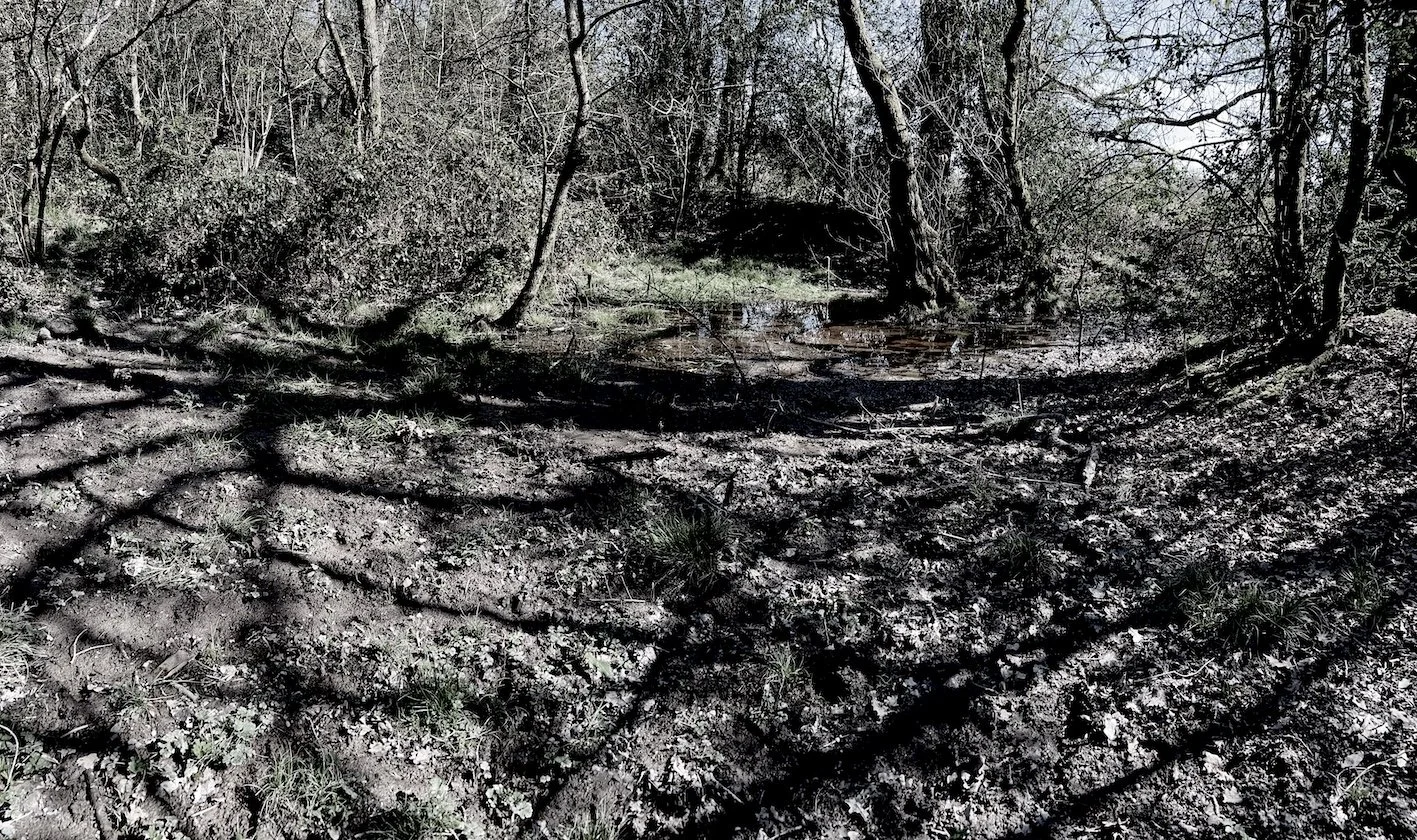
Coal Barton Wood, Coleford. Drop downhill into a valley and there’s a small wood with a tiny stream running through it. Hidden amongst the trees lies an inconspicuous pond, surrounded by brambles and saplings. A trickle of water feeding it can just be seen under the foliage. I’ve chosen this place because it’s somewhere little visited; unnoticed. It has its own boundaries of raised banks enclosing it; walking around it takes less than 5 minutes, despite struggling to extricating myself from brambles and stinging nettles, ducking under tree branches, and wading through deep sucking mud. Once used by a mine, historical maps (1840s tithe map and 1880s OS 6 inch 1st edition), show buildings of which nothing now remains. It seems that the pond was once larger; presumably it's become silted up since the trees were planted or perhaps they just arrived there as seeds blown by the wind, and grew. I intend to visit the pond throughout the year, note changes, pond dip, measure the changing water height, identify plants growing around and in the water. Sitting inconspicuously, hidden from a nearby footpath by the surrounding trees, I will watch, draw, paint, photograph, listen, record sounds, and play. More will be added to this page as I develop work during the year.
Deep encounters
A multifaceted mapping of a small piece of land
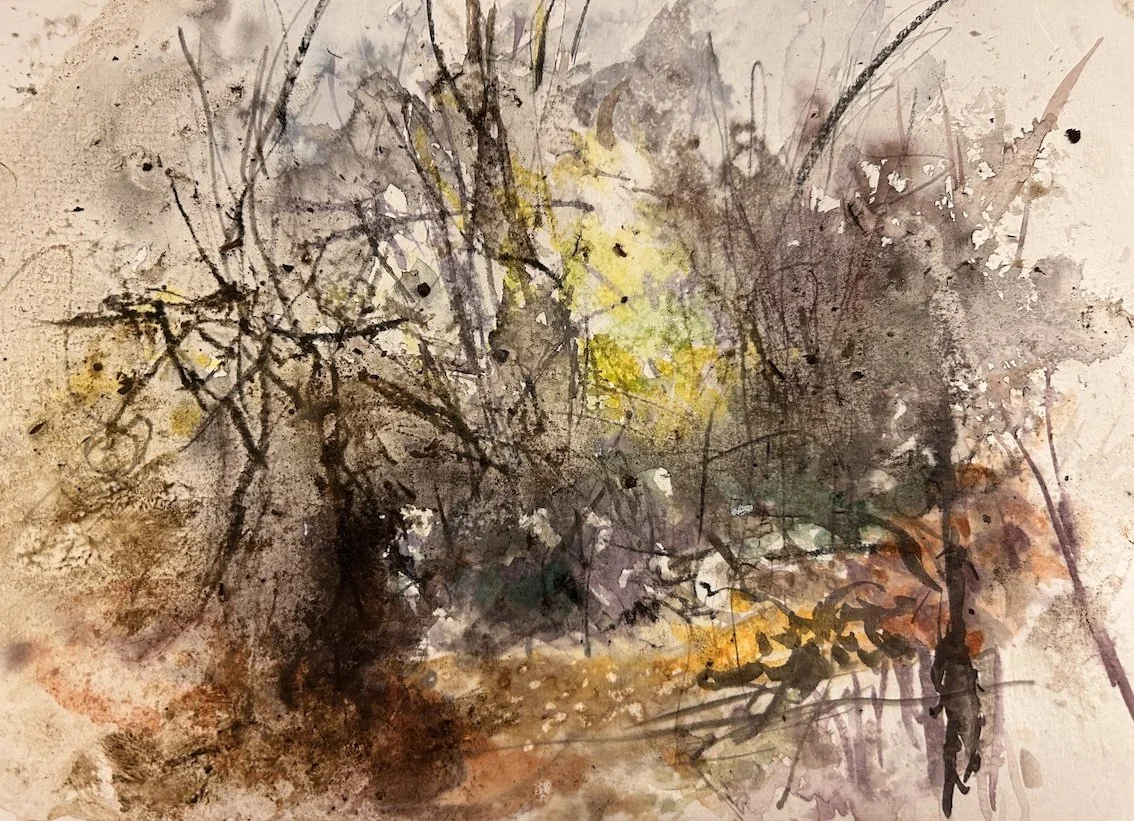
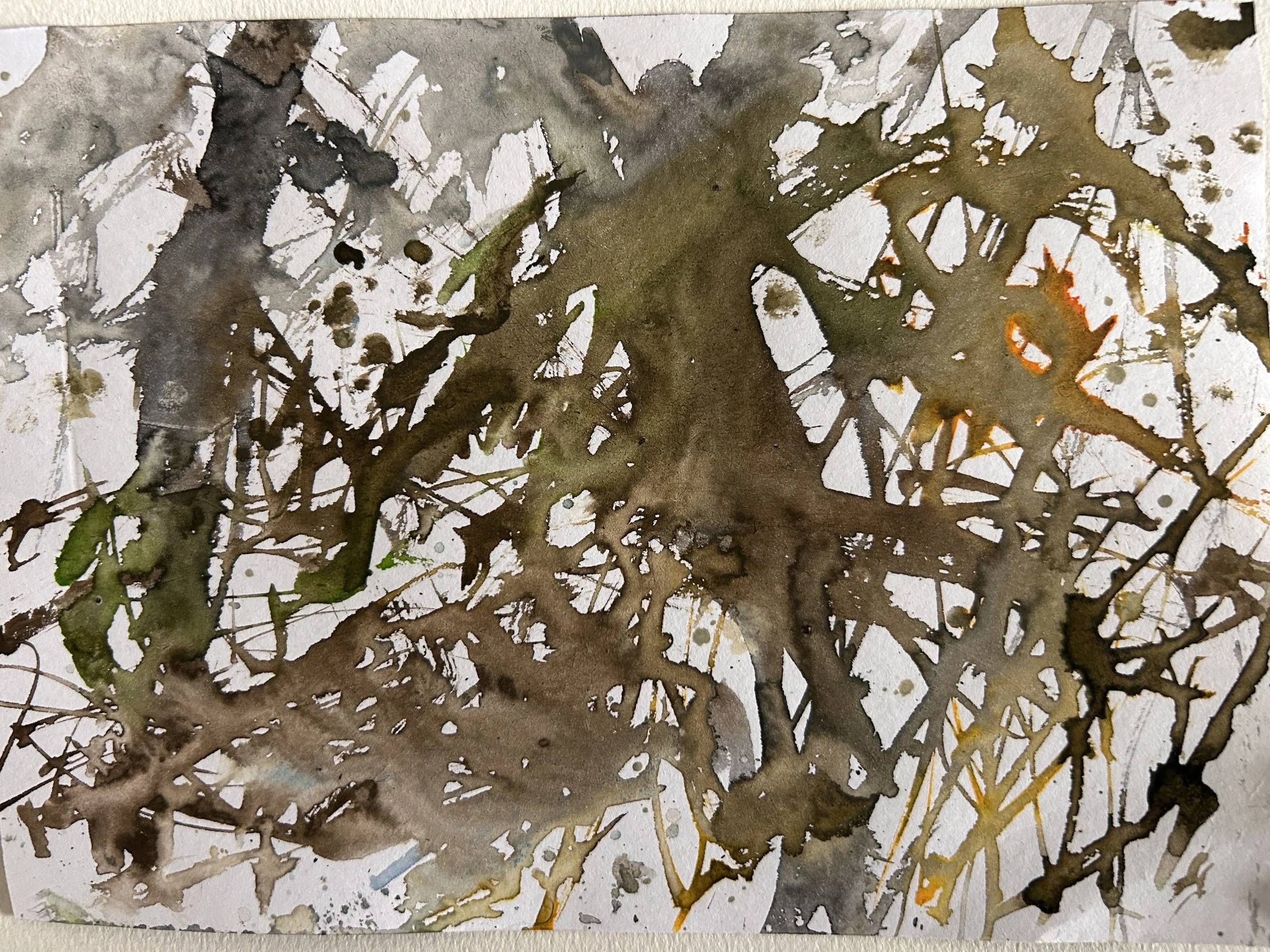
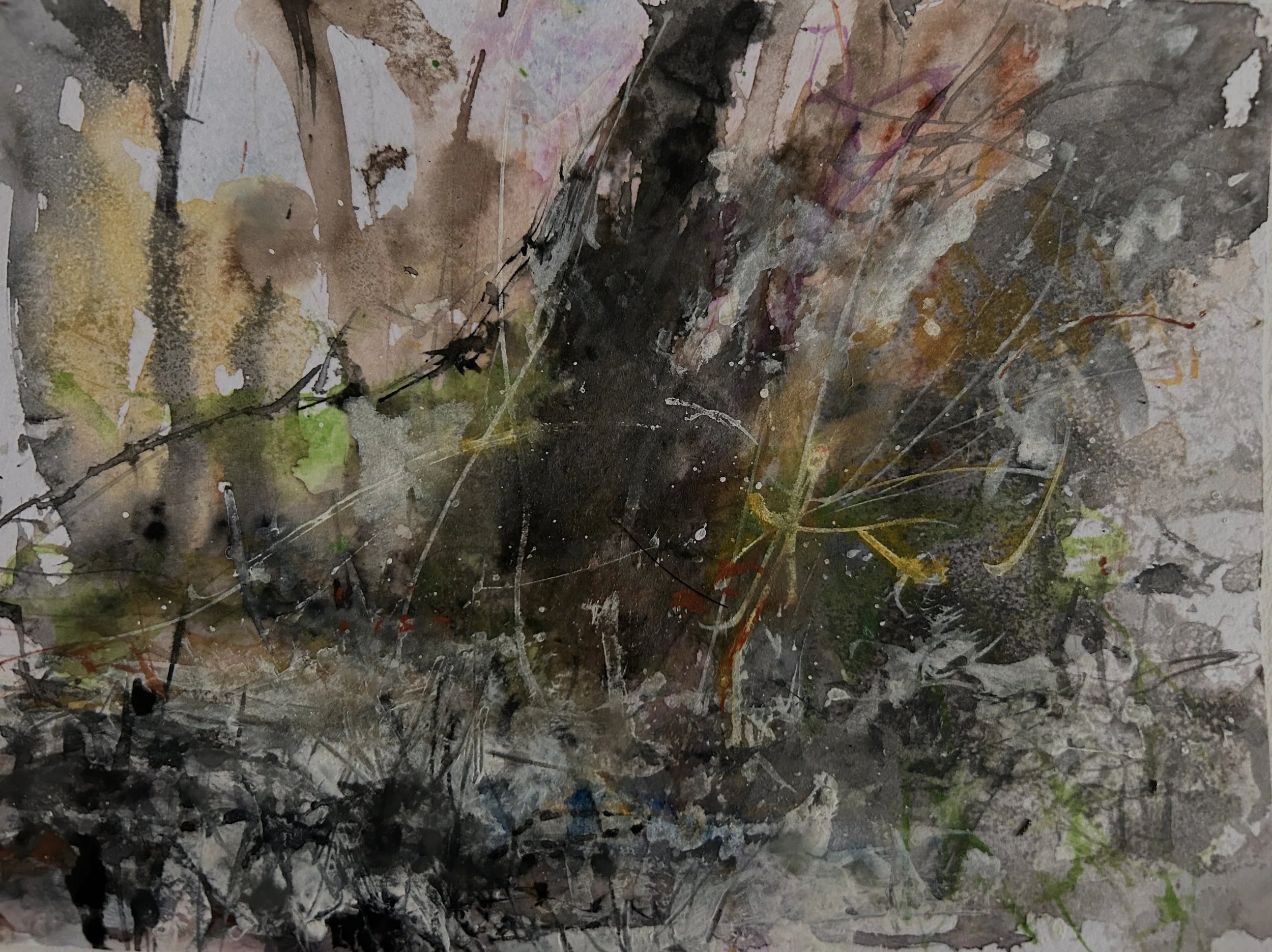
Water colour sketch from the banks of the pond, Dec 2025
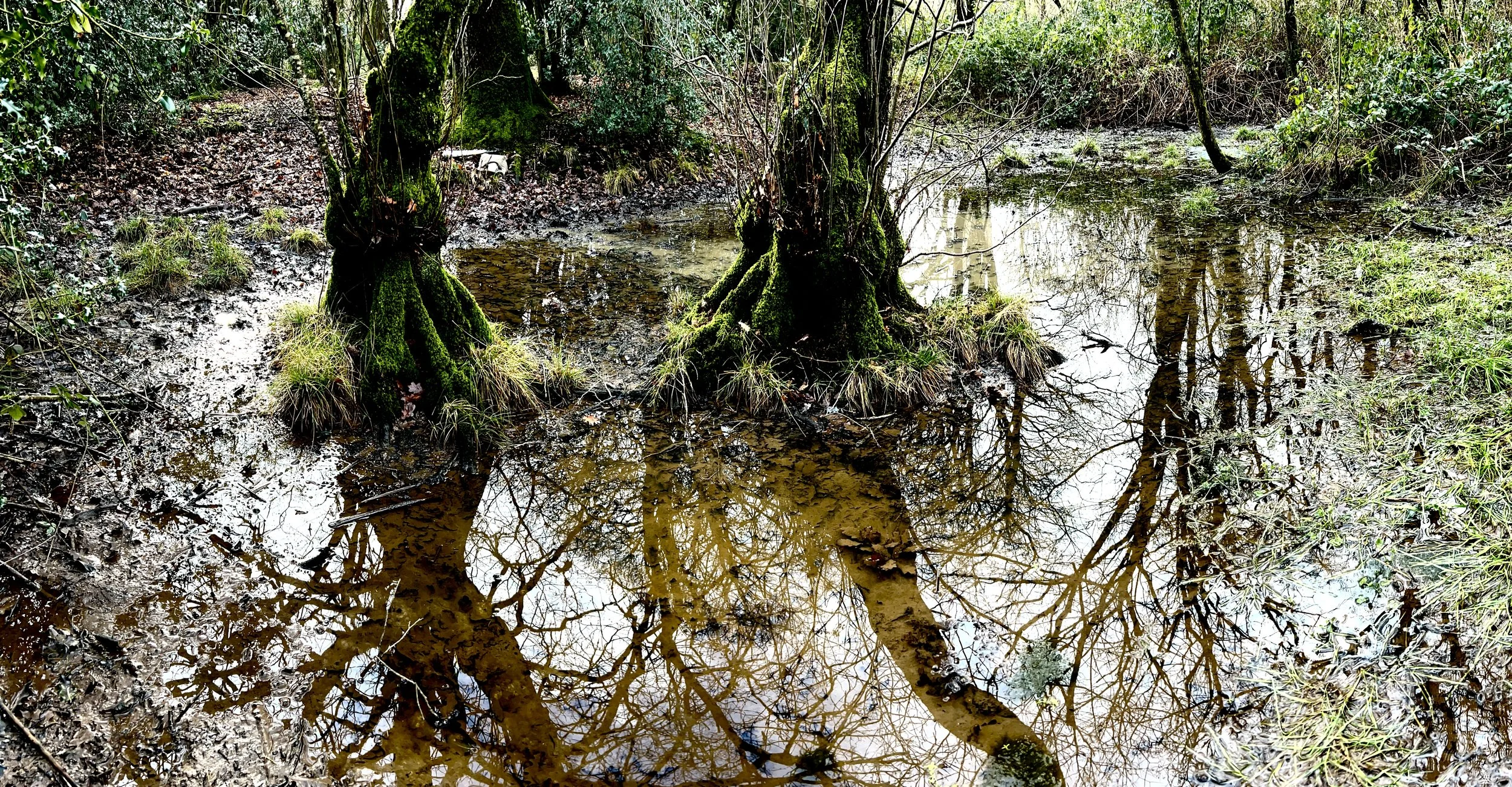
FIELD NOTES FROM THE POND
Wednesday, January 28th 2026
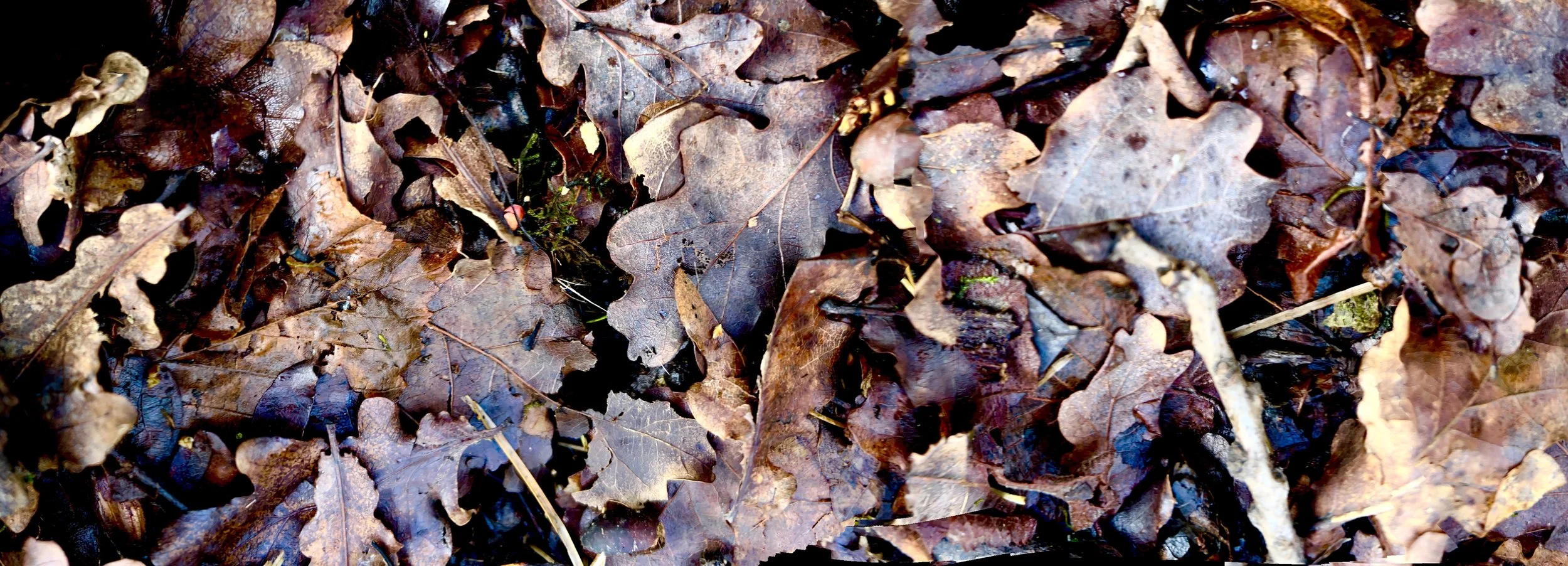
The rain has finally stopped; I escape from the studio and make my way via the familiar footpaths into the small wood to find my pond. It lies hidden amongst the trees; people passing on the other side probably don’t know of its existence. The ground is carpeted with decaying leaves, broken twigs, the occasional tiny red berry.
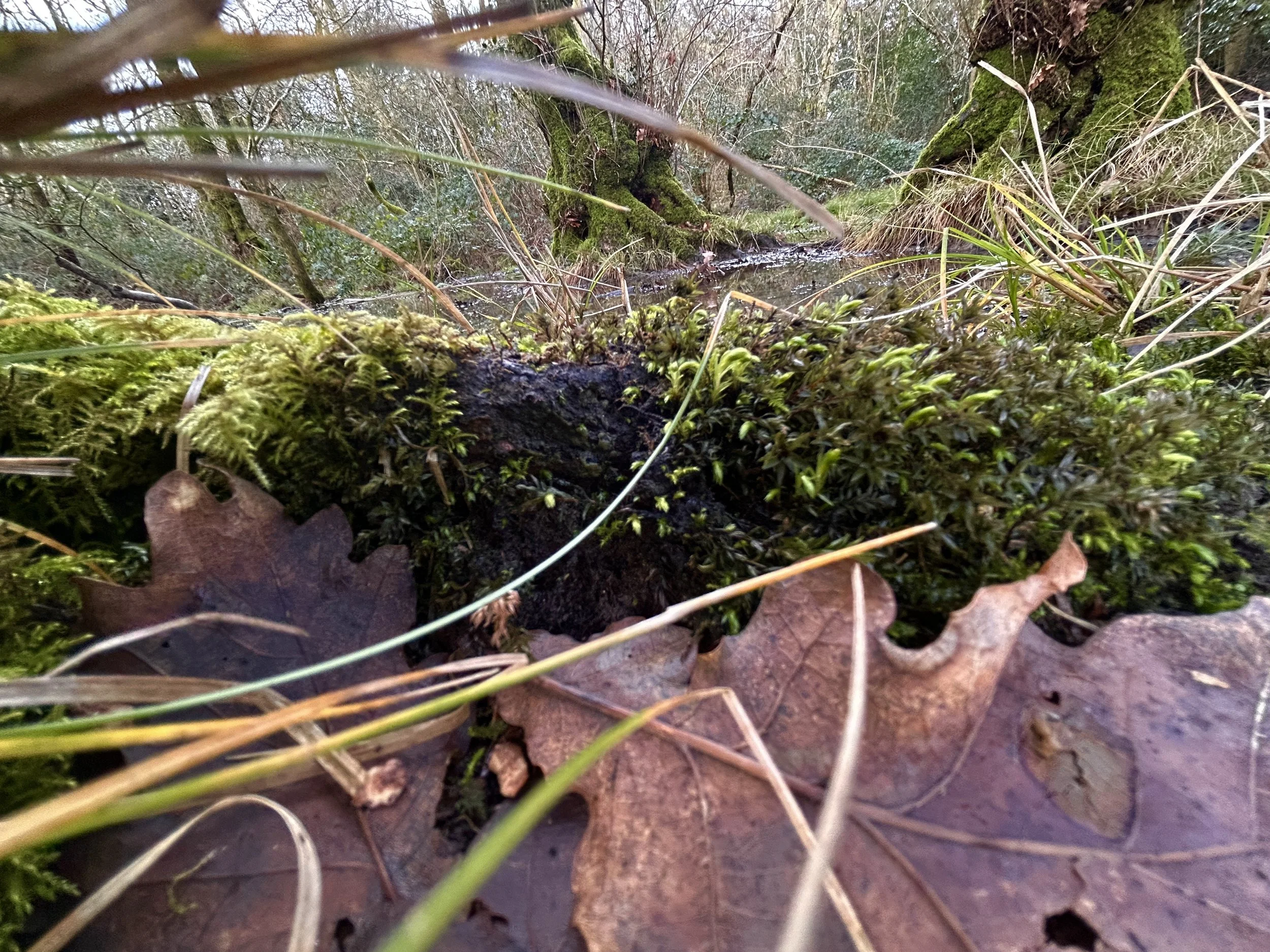
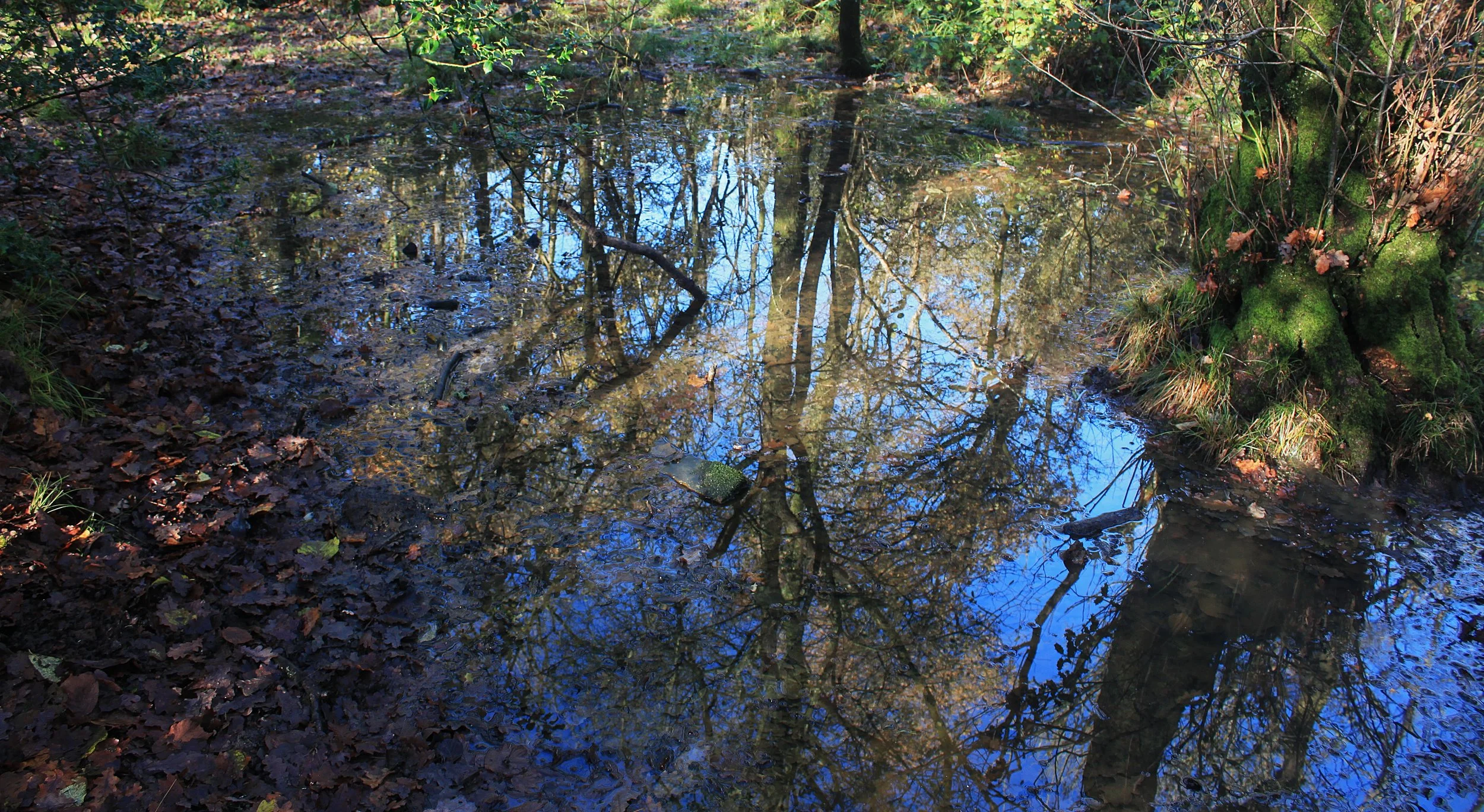
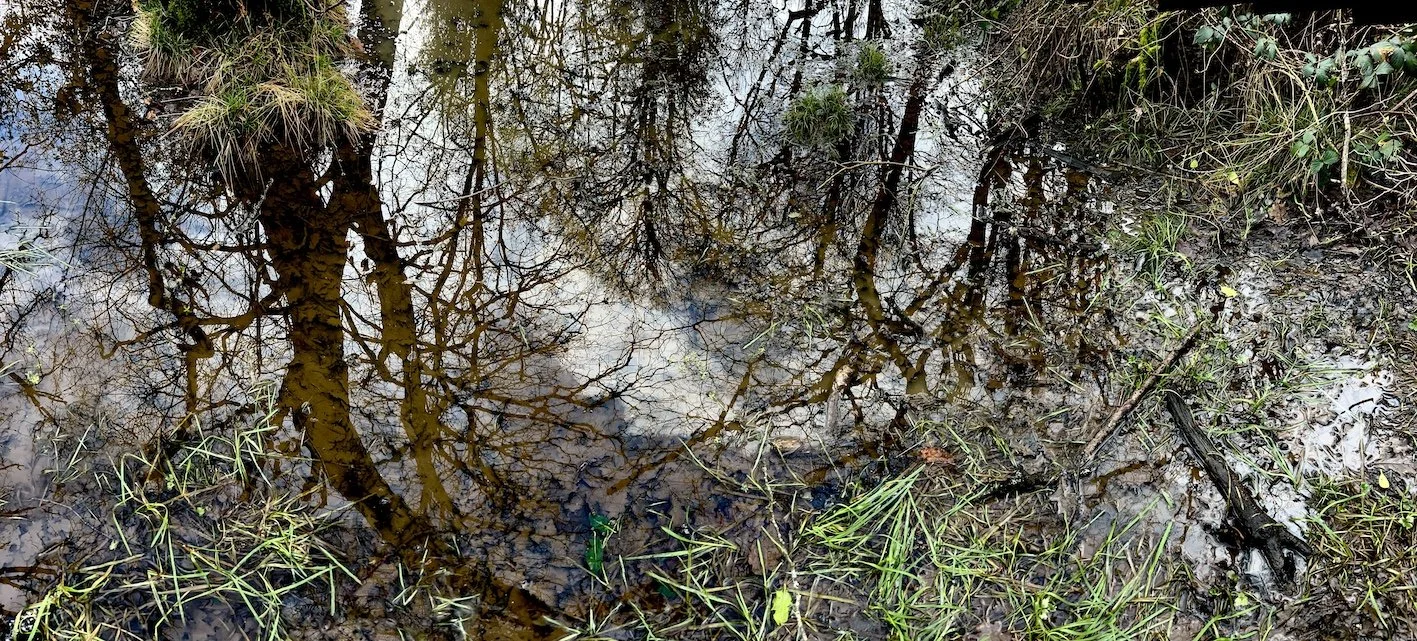
Chaotically intertwined branches create a mass of pattern and colour – shades of brown, green, orange, yellow reflecting on the surface of the pond. Rain droplets hang poised on thin twigs; pale yellow catkins suspended in the air, a few dry red leaves clinging like washing on a line, bright green moss cover tree bark, straggling patches of yellowing grass grow up through the water and around the pond’s edge.
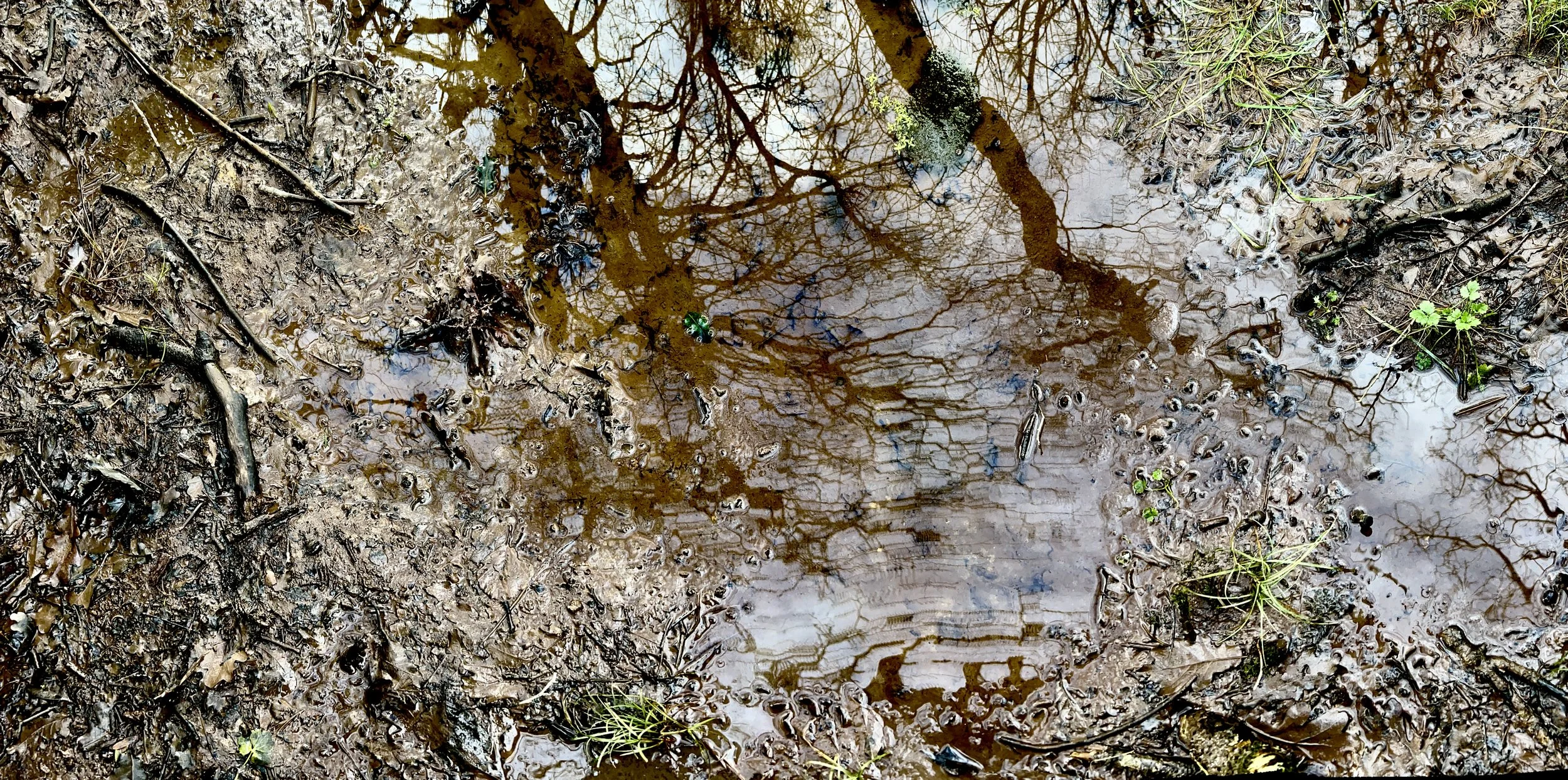
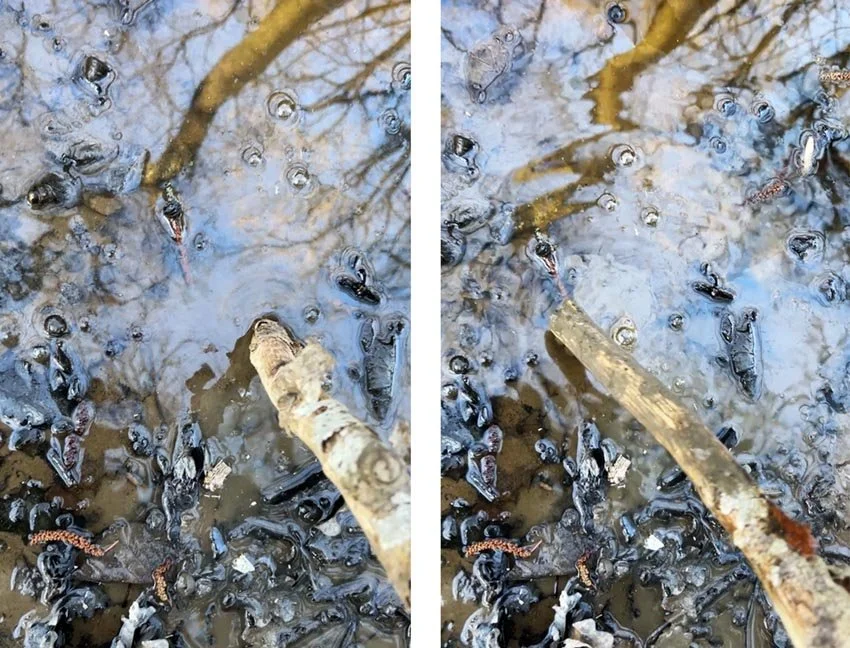
My wellies sink deep into brown oozing mud; it’s an effort to pull them out and remain upright, so I’m rather glad I have the stick. Walking slowly in a circle around the pond, I stir up pale sediment, obscuring patches of light blue sky and cloud, and dark trees reflected on the surface, patterns ripple, tiny bubble rise.
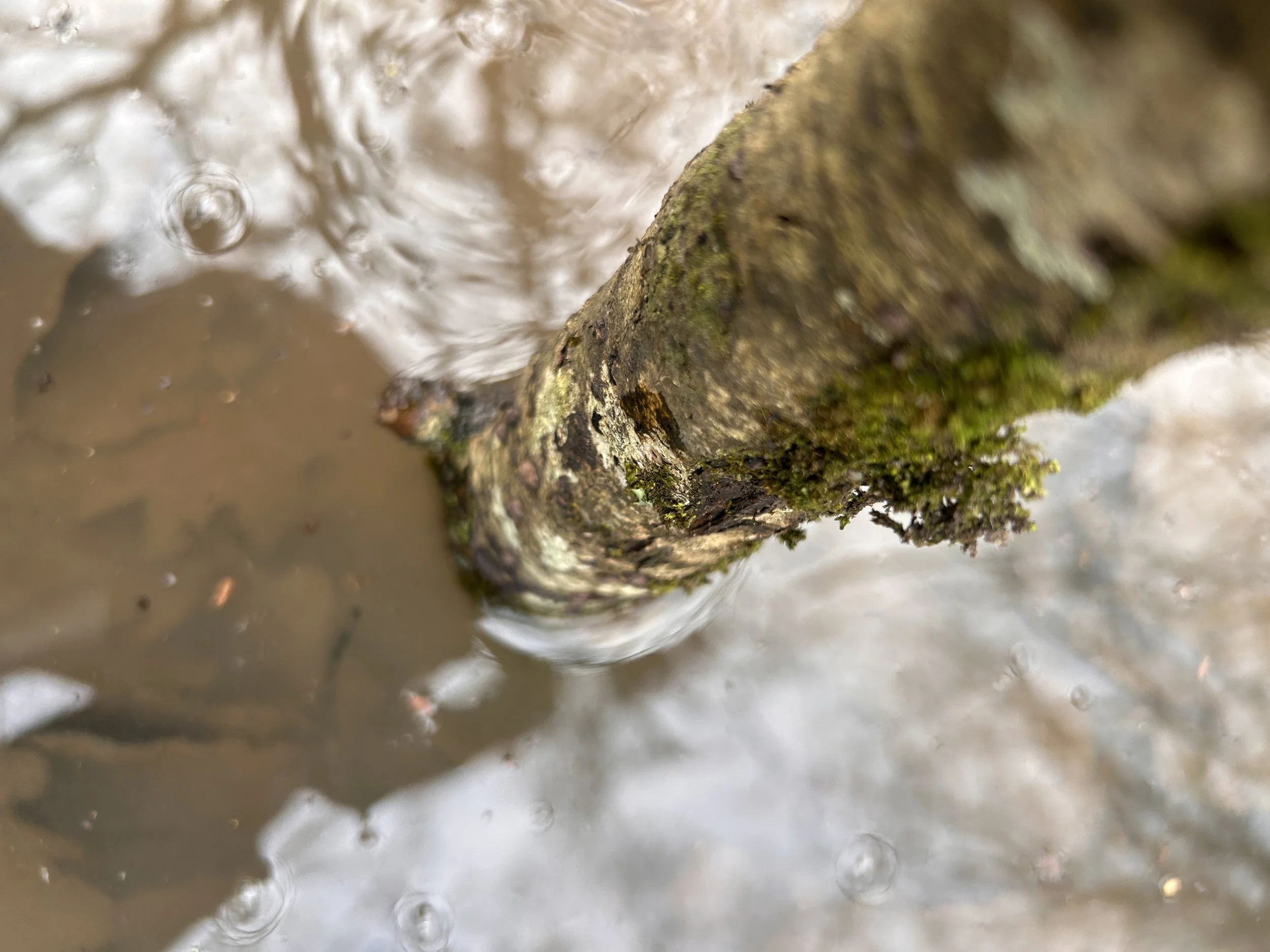
Unsurprisingly it’s pretty boggy; as I wade into the water to measure the depth from the centre of the pond using a found stick – it’s 23cm today.
Above and below merge into one
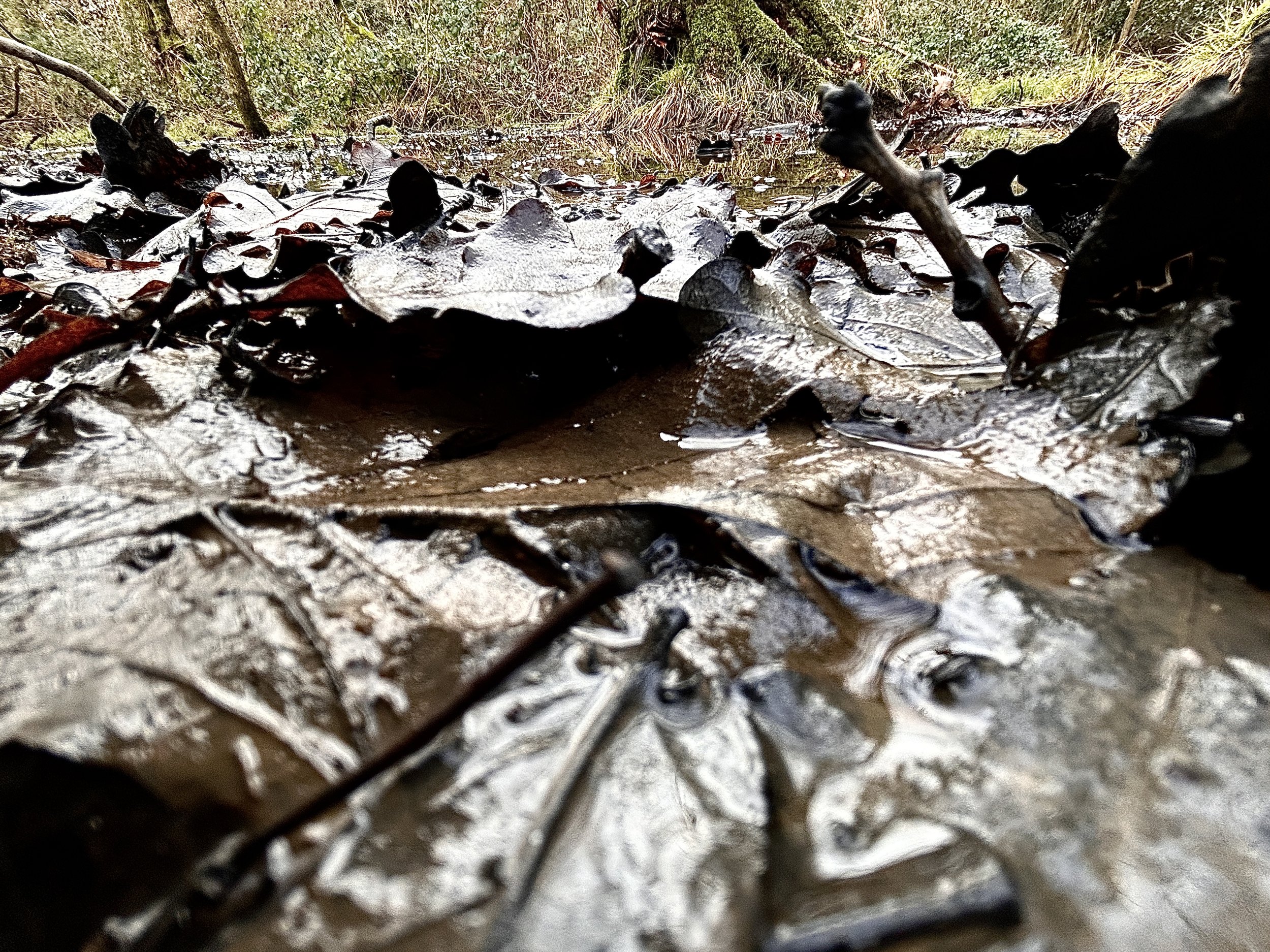
Retreating to dry land, I sit on the bank and listen
Someone passes outside the wood – dog walkers. They can’t see me. Voices fading.
Bird song –
Common Woodpigeon
Eurasian Blue-Tit
Eurasian Robin
Eurasian Jay
Alarm call of an Eurasian Blackbird
Apart from the birds it’s quiet.
The air smells earthy.
Mud around the pond gleams rich brown in the low afternoon light.
I make a couple of paintings gathering pond water to mix colours. The first one I ruin – far too much detail. I wash it off, find a small stick and use it to draw with paint. Better! I make another – just washes of colour (I draw on this when I return to the studio and the colours have dried. As an oil painter I find it difficult to wait for layers to dry)
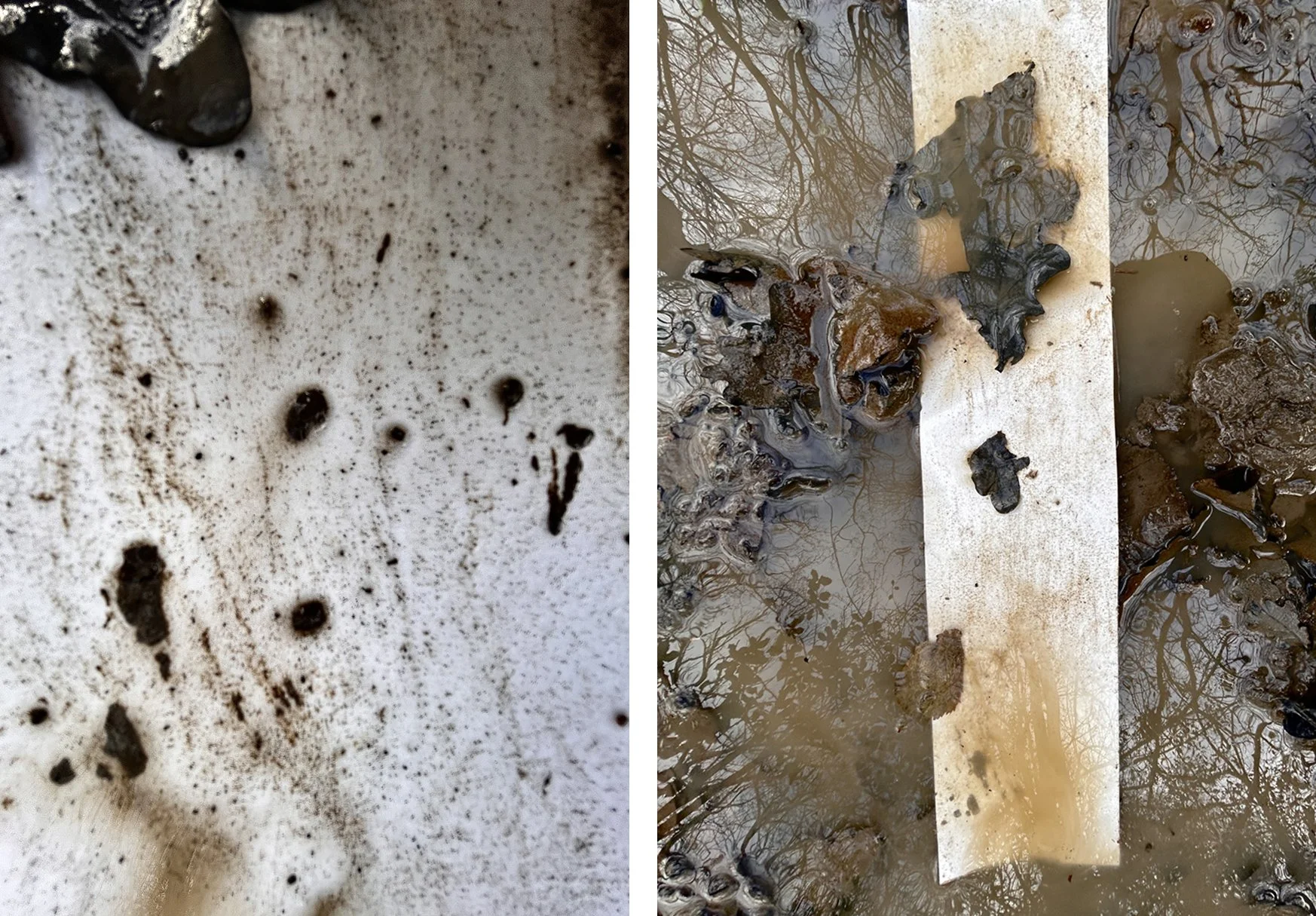
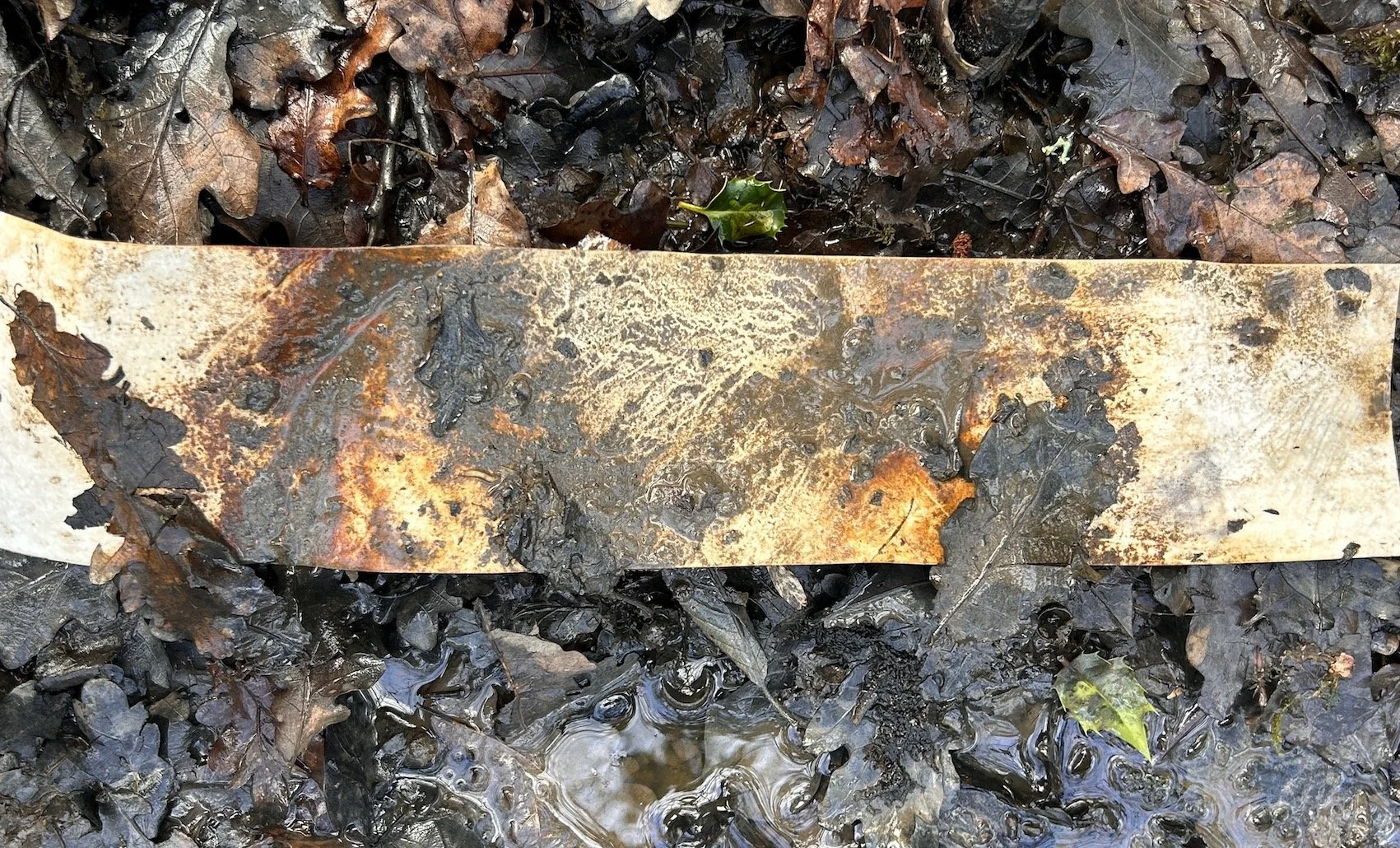
I float a strip of watercolour paper in the pond, pushing and pulling it through the mud, then bury it in earth and leaves on the bank, and wonder if it will still be there when I return?
Things I plan to do:
Photograph using a macro lens and magnifying lenses
Record sounds above and under water
Film underwater
Identify plants
Pond dipping
Water samples
More drawing
More painting
Listen
Learn to be patient
Play
Things I must try to do:
Stop trying too hard - it’s okay to just be there
Sit and do nothing (this will be tough!)
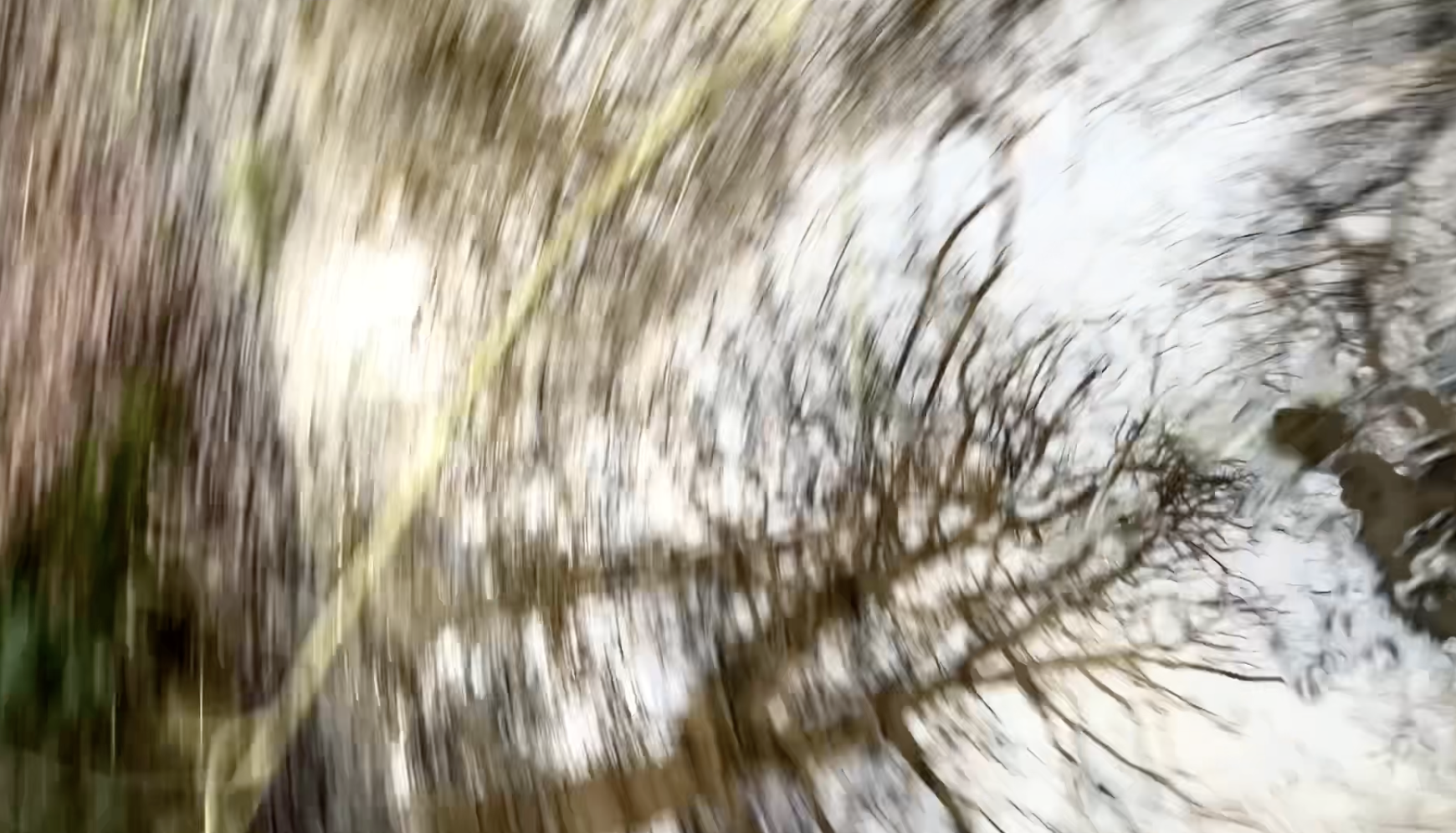
Sunday, March 1st, 2026
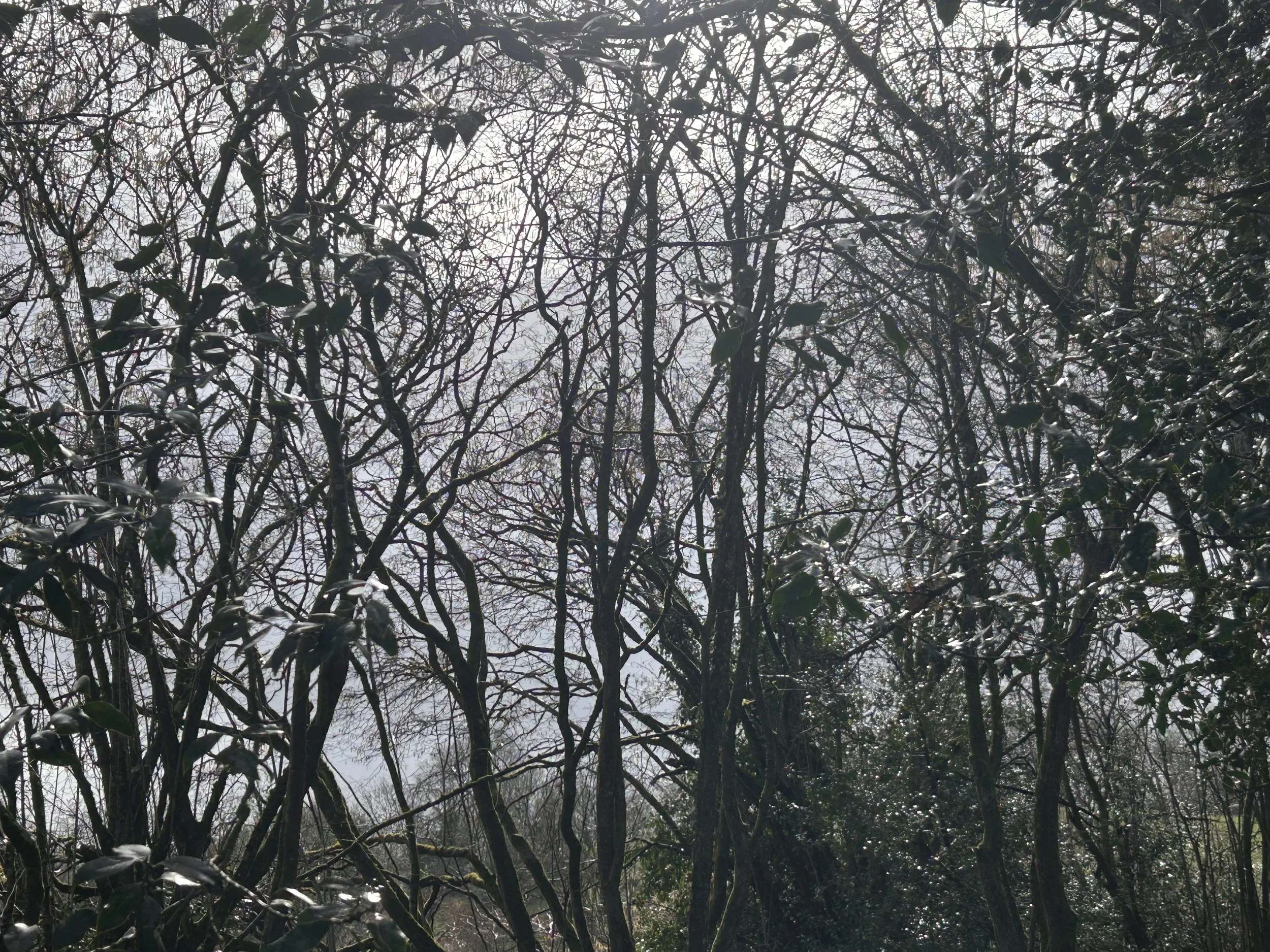
A visit to my pond after (still) more rain. I take a friend and her dog to meet the pond - they’ve been walking here for years yet had no idea that the pond existed until now. I realise how hidden it is; the footpath is just the other side of the pond. There is a sort of entrance to the woods framed by the trees, yet you can’t actually see the pond and its embankments unless you go looking. Most people (and they are probably just out walking their dog), if they do come into the wood, turn left and follow the well trodden track, which is fine by me.
It’s still pretty wintery looking. Light through the trees is soft, pale sun trying to emerge through a still grey sky. The remaining leaves hanging on the trees drip with rain. The ground is slippery with black decaying leaves and twigs blown down from the trees in the recent winds.
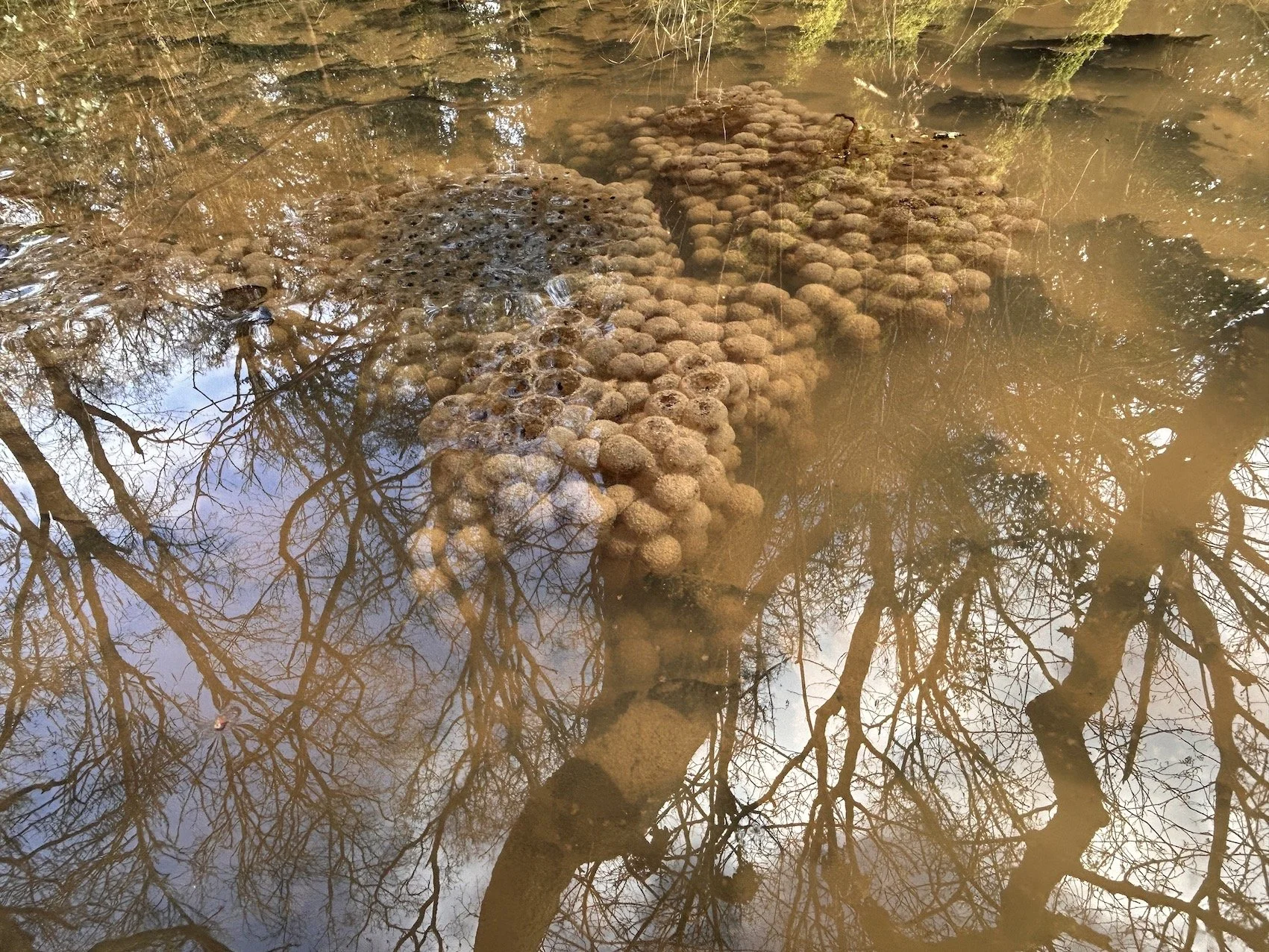
I wade into the pond, balancing precariously as mud sucks and sticks to my boots. Pressing my stick into the mud, the level is about 35cm, deeper than last time. I’m surprised that it hasn’t risen more given the days - month - of rain that has fallen.
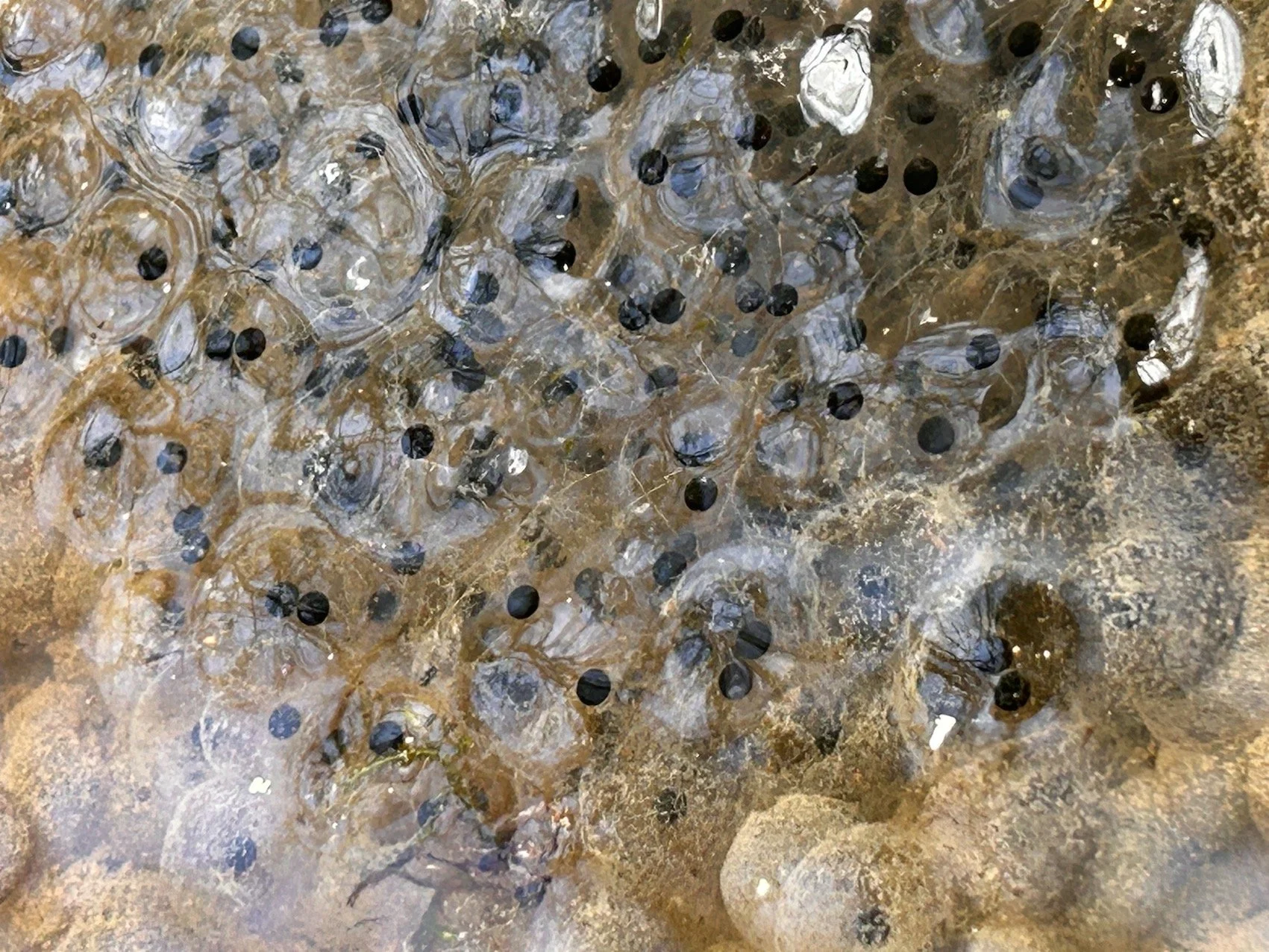
I’m puzzled by strange clusters of brown pod shapes hanging in the water. Closer investigation and realisation - since my last visit, frogs have visited and been busy - these are large clumps of frogspawn, floating in the pond, some with a fine coating of brown mud. Spring is clearly here. At the moment they’re just black dots floating in jelly. It’s going to take about 3 weeks for the tadpoles to emerge; I’ll have to make regular trips to check on progress, and just hope that the birds don’t get them all.
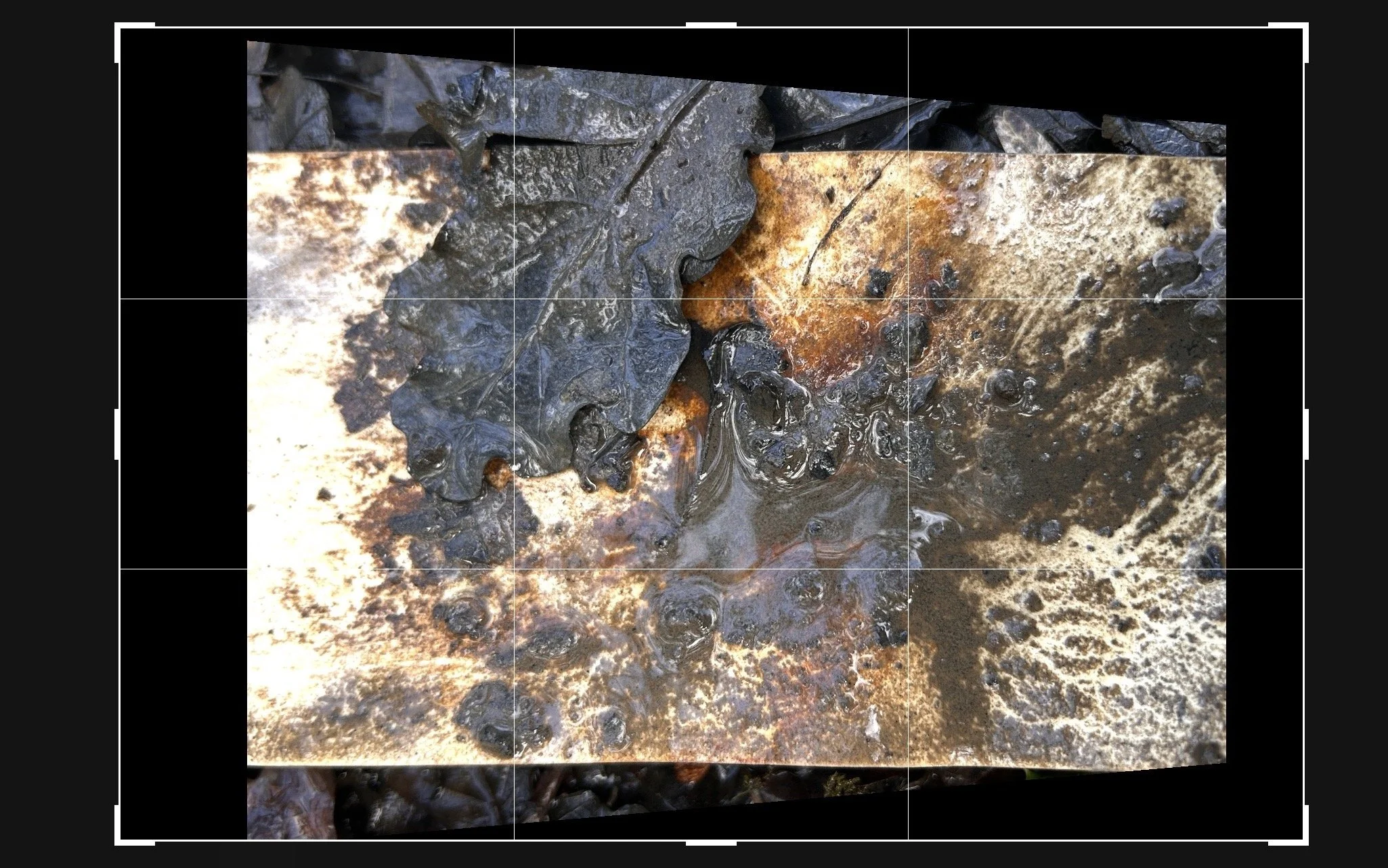
I poke about for ages looking for the strip of paper I buried on my last visit. I thought I knew where I’d placed it….and am about to give up when I see a corner poking up amongst the dead leaves and muddy water on the bank. Carefully uncovering it, I photograph it in situ before carrying the strip out to film; the wet glistening colours and textures on it are fabulous.
Jane sends me her recording of the birds singing. An impressive number of species. We attempt, unsuccessfully, to spot them in the trees.
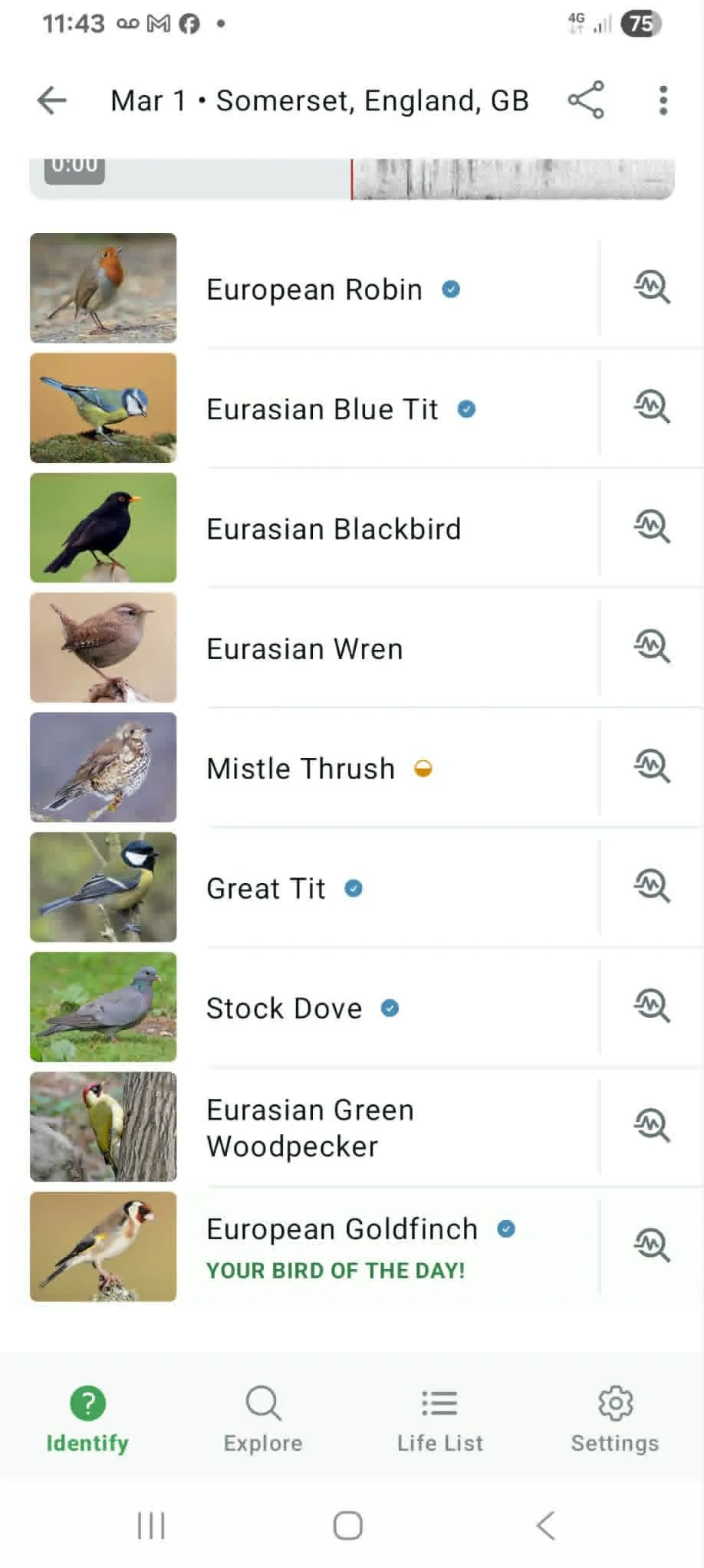
Another recording later scores even more to add to the list - a passing buzzard, a carrion crow, a Blackcap, a Coal Tit, and a Chaffinch.
Wednesday, March 5th, 2026
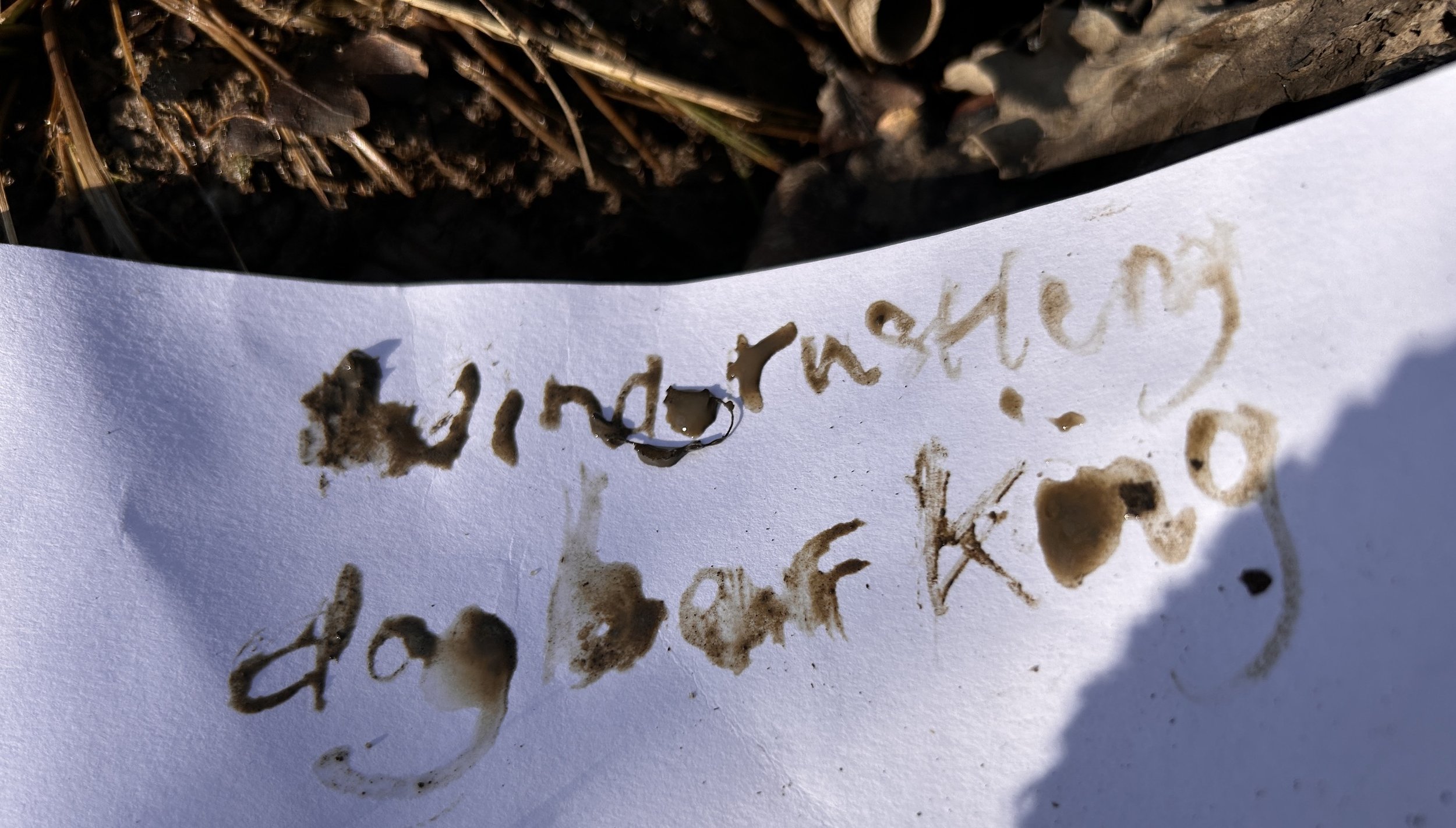
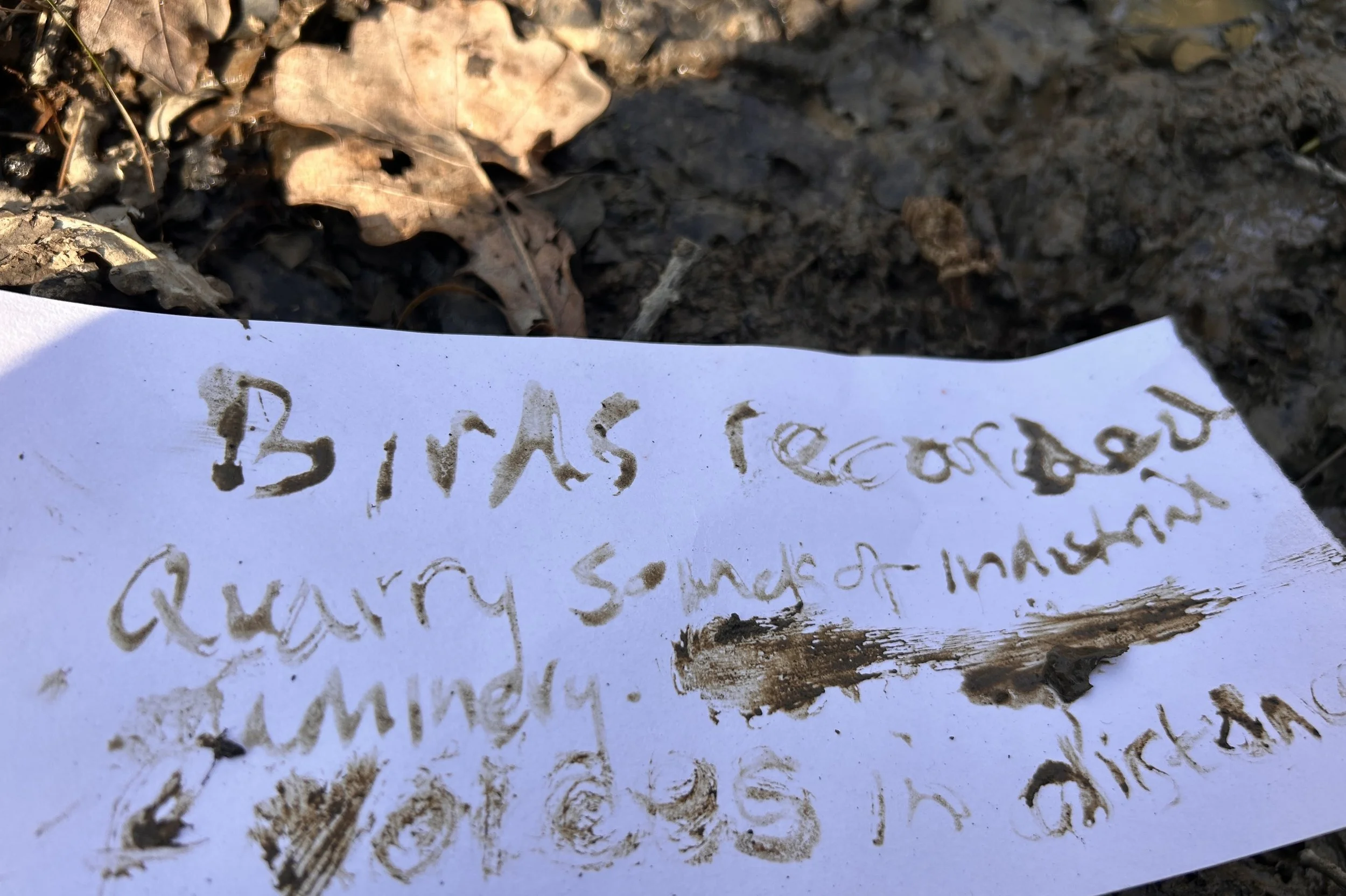
I have been given a challenge: ‘A silent encounter (for an hour) – what do you hear, sense, notice, are drawn to…?’ I’m not doing too well at sitting still and just listening, but I try. I’ve brought a pencil and paper, but the pencil turns out to be a blunt white pencil crayon and completely useless, so I resort to trying to scribble sounds down using mud and a twig.
I’ll translate my poor writing:
wind rustling in the trees - dog barking - birds calling - knocking sounds from the quarry that’s about a couple of miles a way - distant voices - my breath - scratching of my stick as I write.
The brown mud holds many shades - from pale to dark, and, in places, bright orange; I glimpse flecks of bright red from fallen berries missed by the birds. Pale yellow grass straggles around the edge of the pond. A bright green coating of moss covers the tree trunks rising from the middle of the pond; holly leaves bring a colour to the otherwise, bare trees. Here and there poking out of the water, a few bright green leaves have begun the appear.
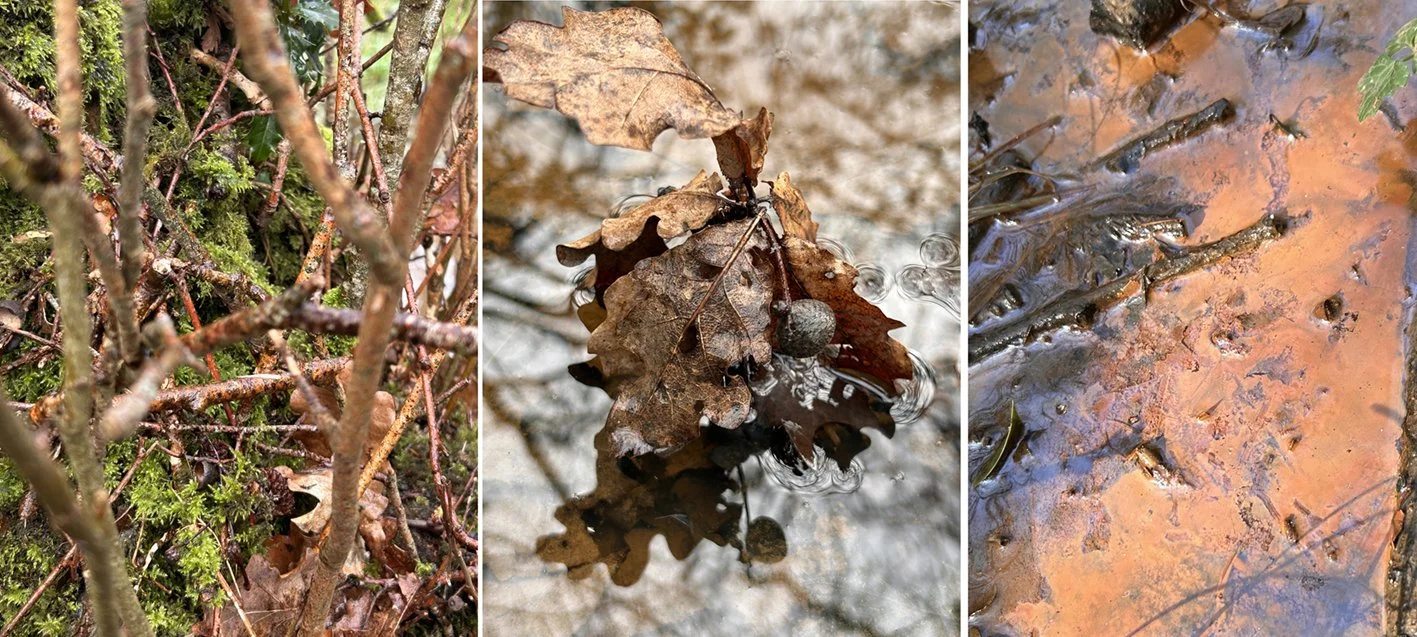
It’s the textures in the mud and water that attract me. I stare into the water; there’s a whole world going on in there. Occasionally small bubbles rise to the surface; I can just about see myself reflected in them. There’s a meniscus around each one - ripples radiating out around a tiny fragment of air trapped inside a bubble. Anything that sticks out of the water has a set of tiny ripples like contours around them.
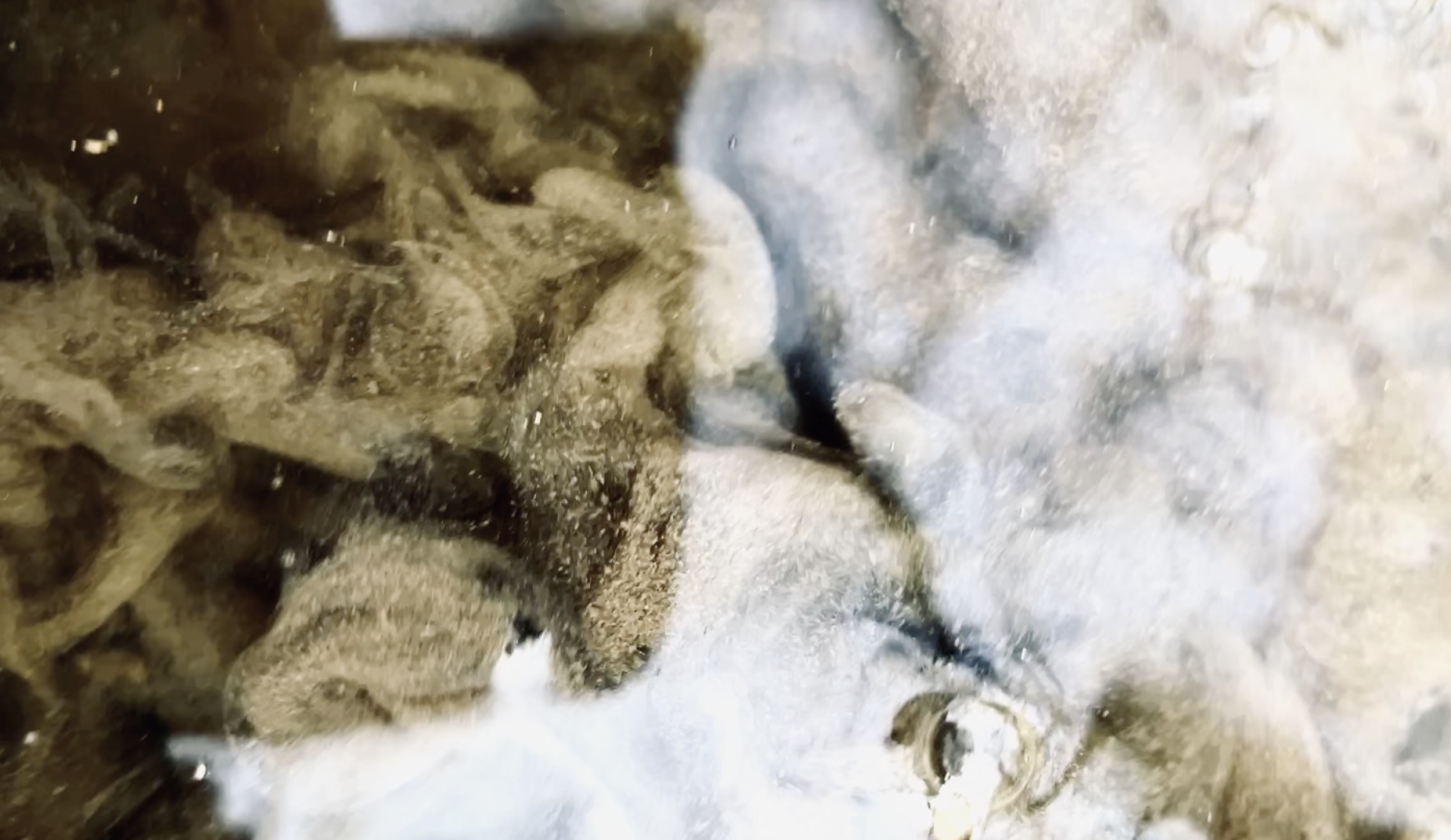
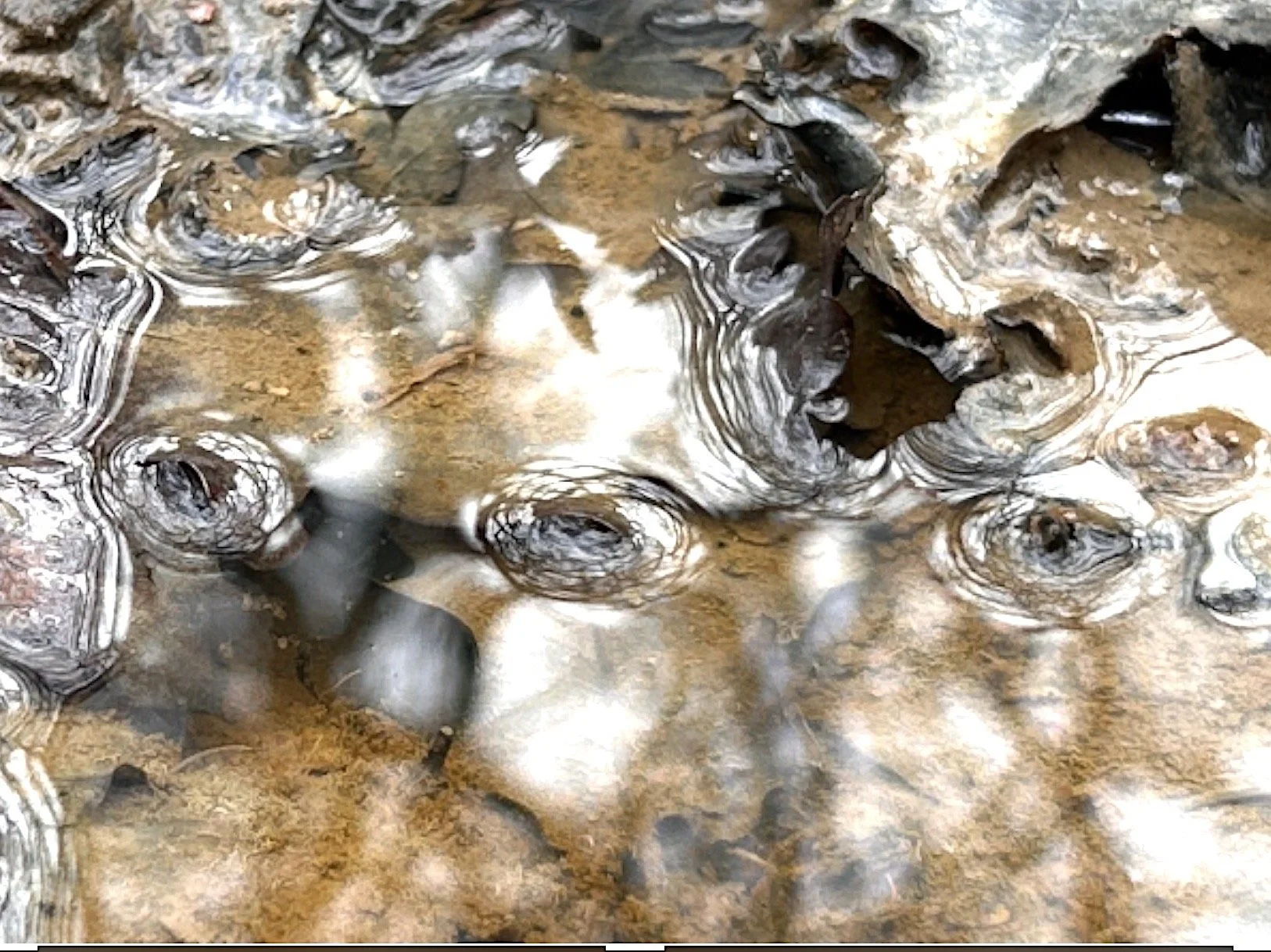
Fine particles of earth hang suspended in the water, moving slowly as sunlight catches them. I stir the water, watching tiny atoms swirling and settling.
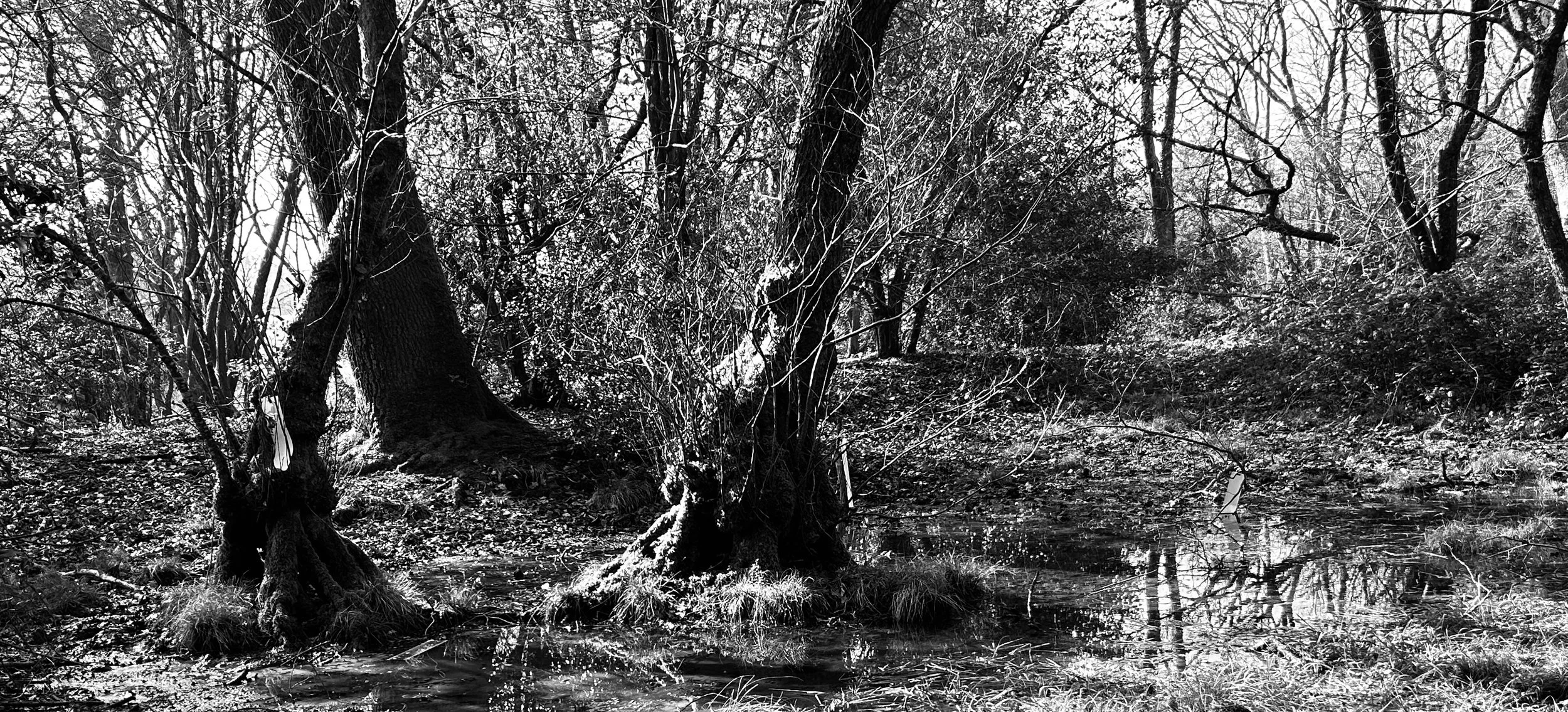
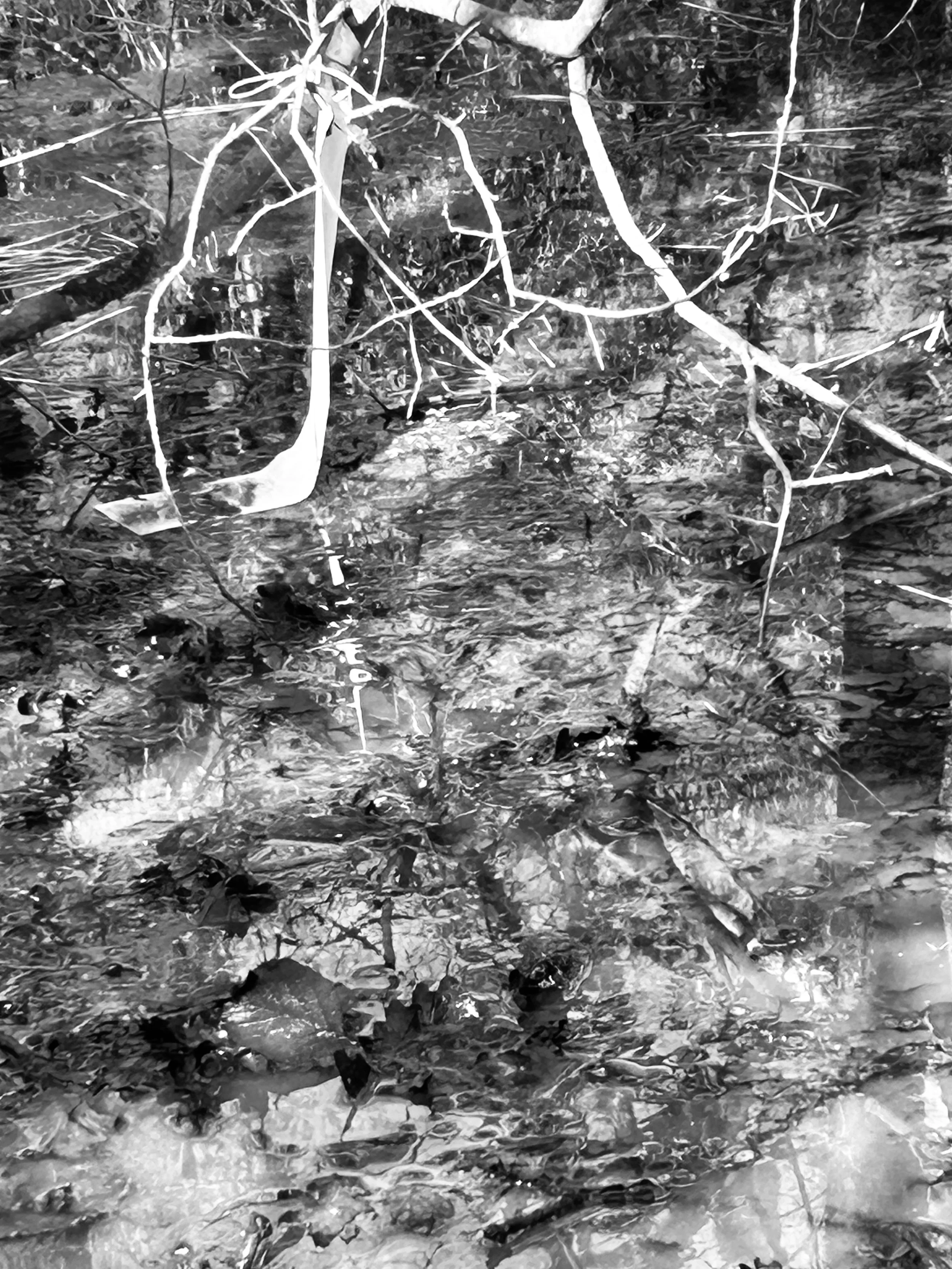
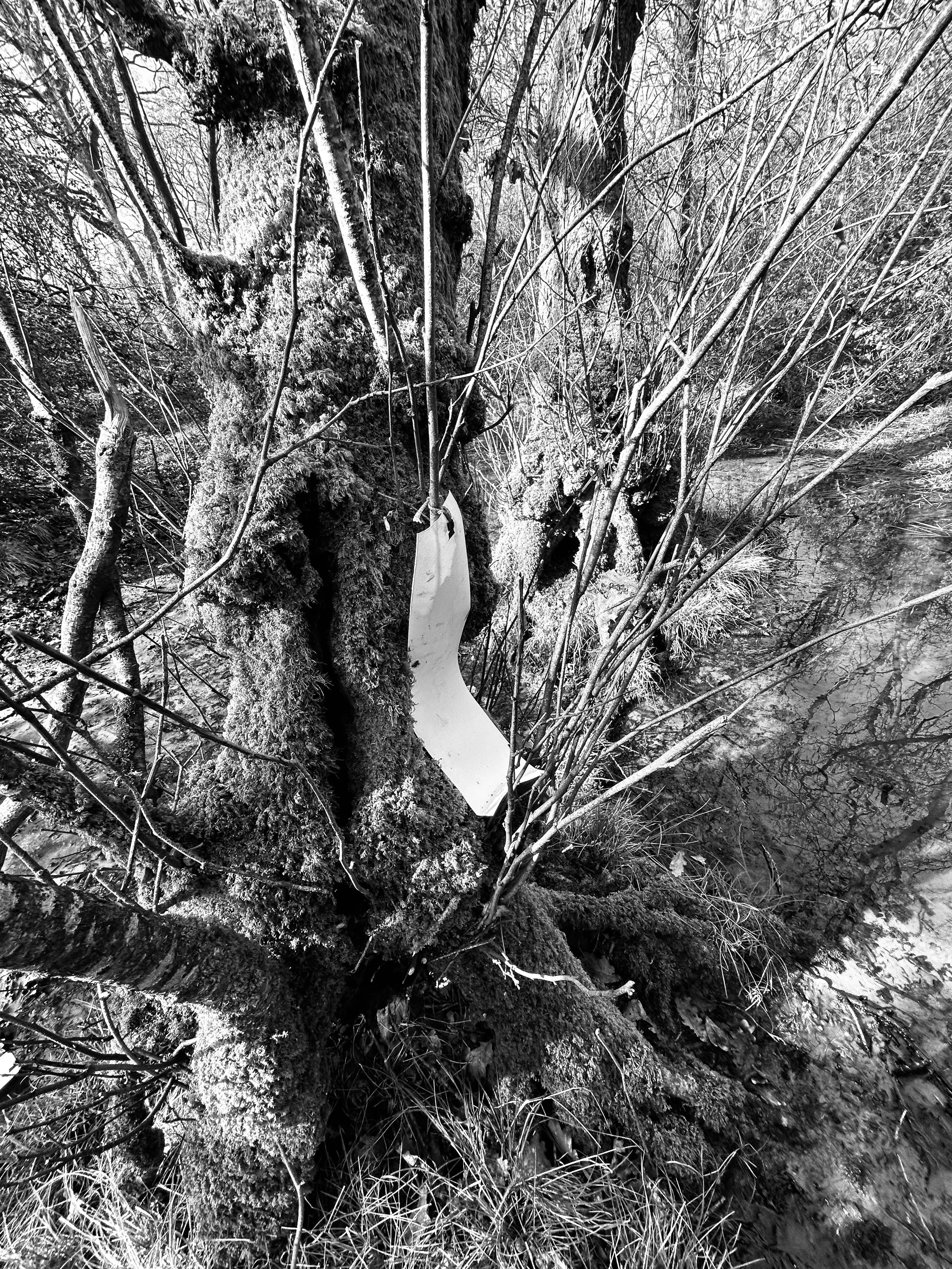
I’ve brought eight strips of paper and place these around the pond; some I hang in trees, letting a couple touch the water, some I bury, and one I curl up and tuck into a hole in the base of the tree. Whether they will still be there when I return is anyone’s guess.
Saturday March 21st
I return to my pond in high expectation of finding a mass of wriggling tadpoles, and am disappointed to discover all the frogspawn has disappeared; only a few tiny tadpoles lurk in the muddy water. Maybe they’ve swum off to hide in the shadows, more likely they’ve been eaten. I’ll have to wait to see if any frogs appear.
I’ve forgotten my stick; I find another, walk into centre of the pond, and push it as deep into the mud as I can without falling over. The depth is at least 12 inches, although the surface water level and circumference it covered at my last visit, 3 weeks ago, has diminished considerable. There’s been less rain; maybe it will dry up completely over the summer.
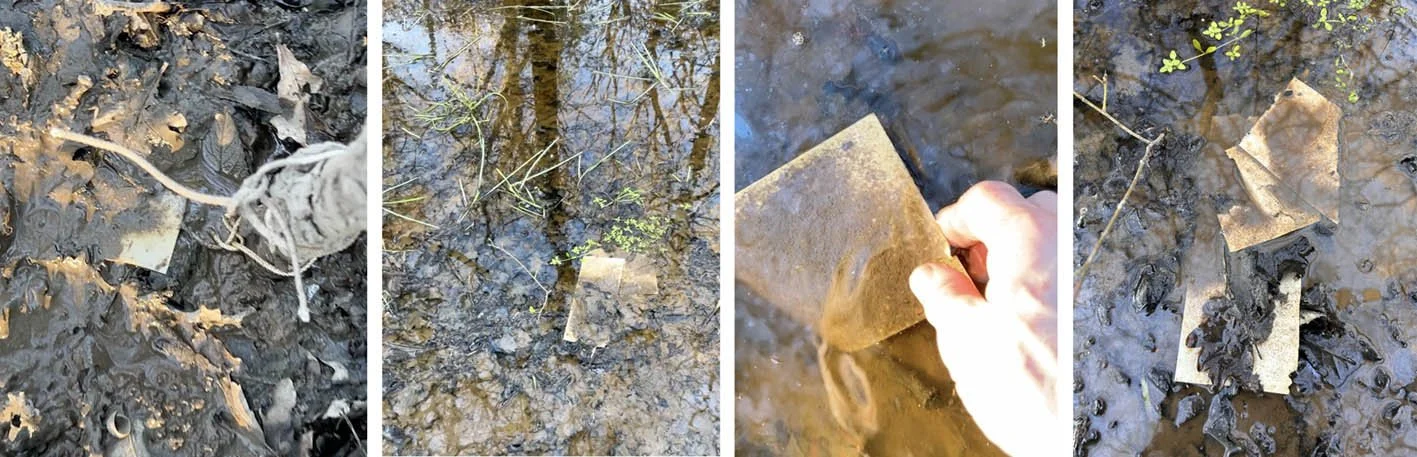
My strips of paper are in various states of disintegration; two that I’d tied hanging low over the water have disappeared, and I spend ages wading through the pond, tracing them, dragging a stick through the mud. Eventually I manage to retrieve most, now in several pieces.
On the bank I carefully re assemble and photograph these before carrying them back to the studio to re-photograph. They’ve been absorbing the silt in the pond water; are now imprinted with textures of earth and leaves, stained brown and orange. The one hanging in the tree is still intact, as is the coiled piece hidden in the base of the tree in the centre of the pond. I leave them in place for another visit. I have a plan to use pieces of raw canvas, which might not deteriorate so quickly.
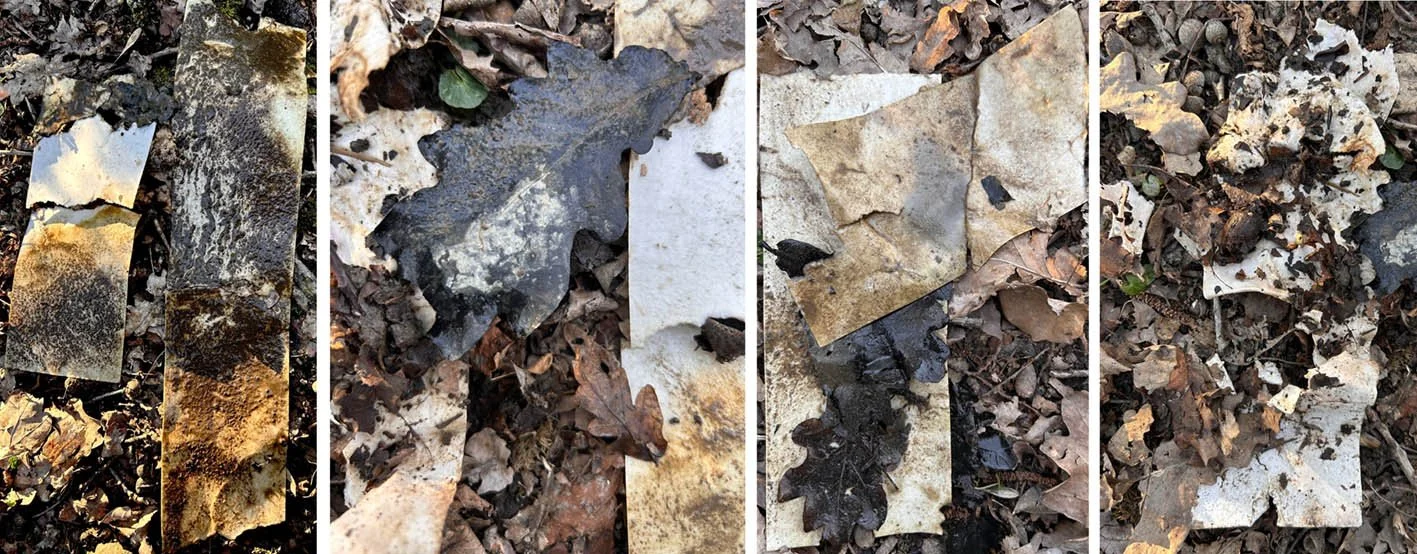
Paper from the pond
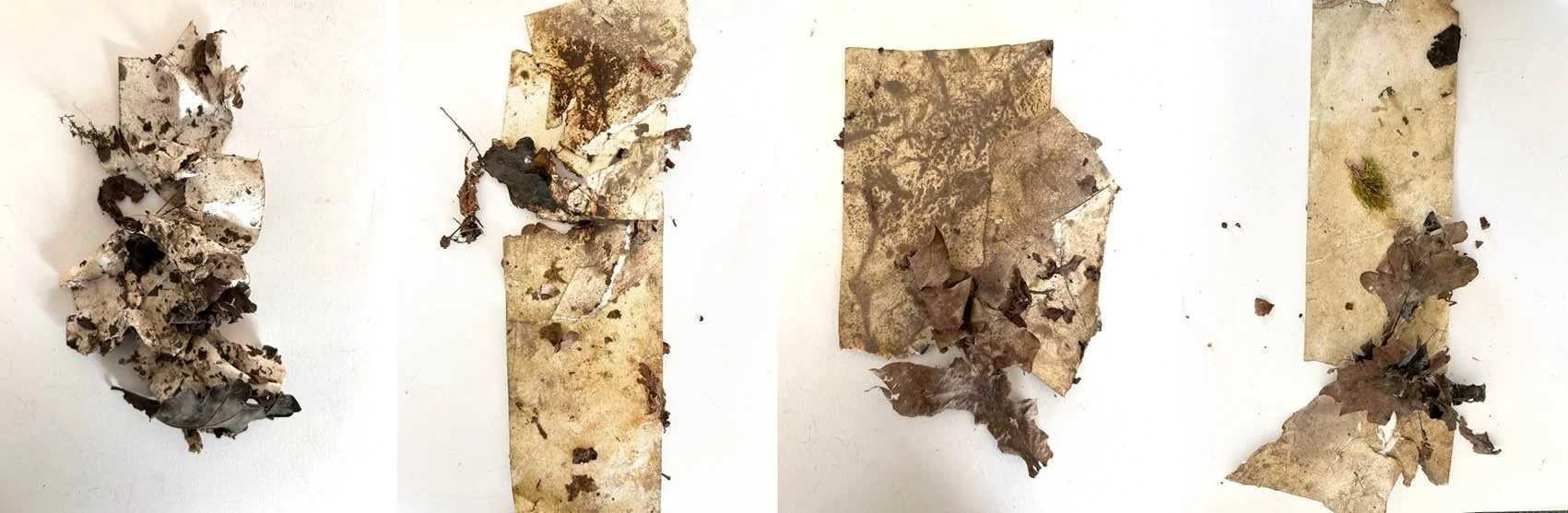
Thursday, April 2nd
I’m back at the pond for a brief visit and find lots more tadpoles - hurrah! The sun warming the water seems to have brought them out of wherever they were lurking on my visit a couple of weeks ago. They’re still such tiny fragile emerging lives; I watch them wriggling through their watery world, glimpse them hanging motionless amongst decaying vegetation.
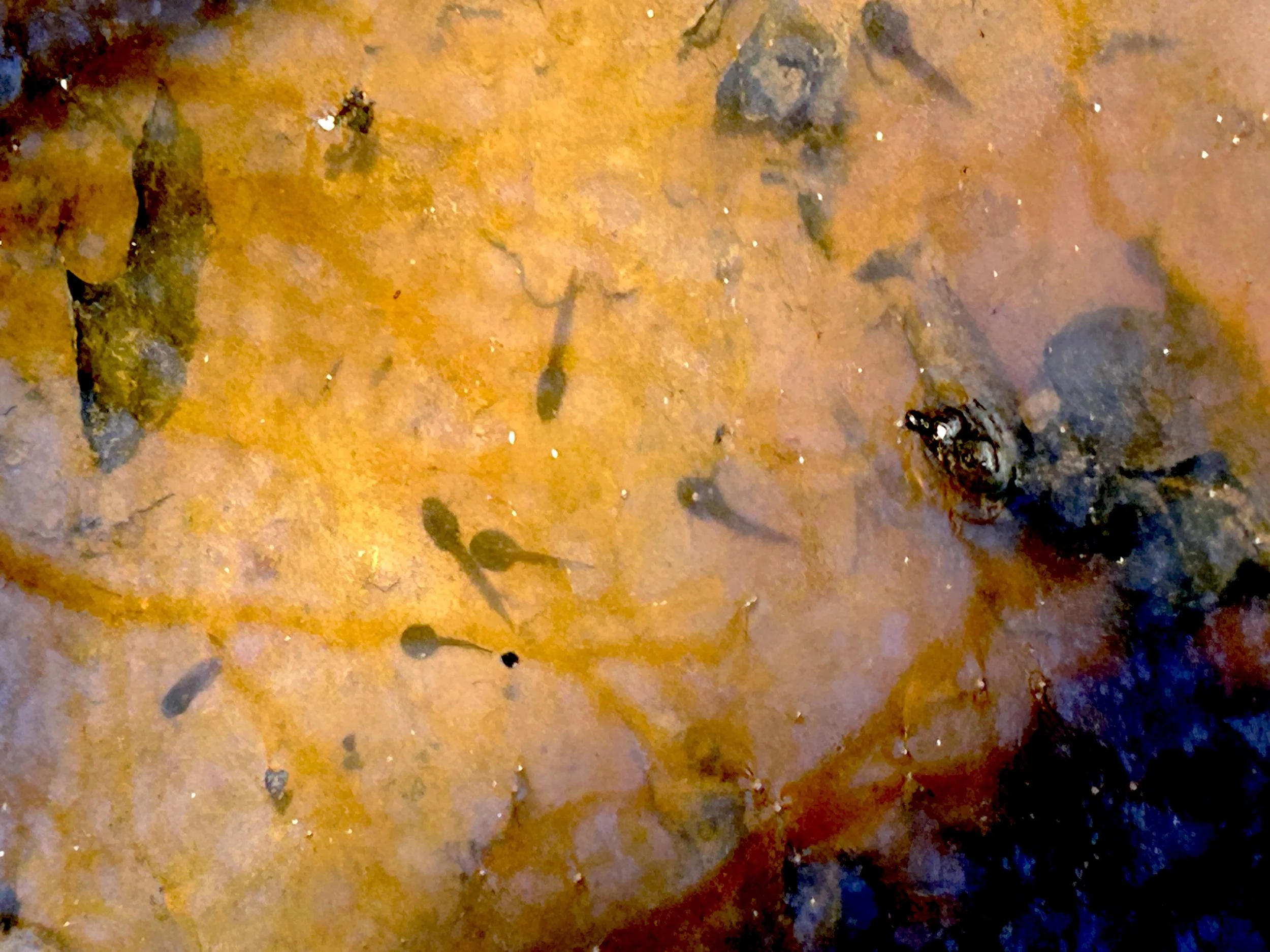
The water level in the pond and the circumference covered by water has significantly reduced; now it’s just a few inches deep, although the mud is still pretty gloopy, sucking hard at my boots as I wade through the water. I press my stick down into the depth - now about 10 inches.
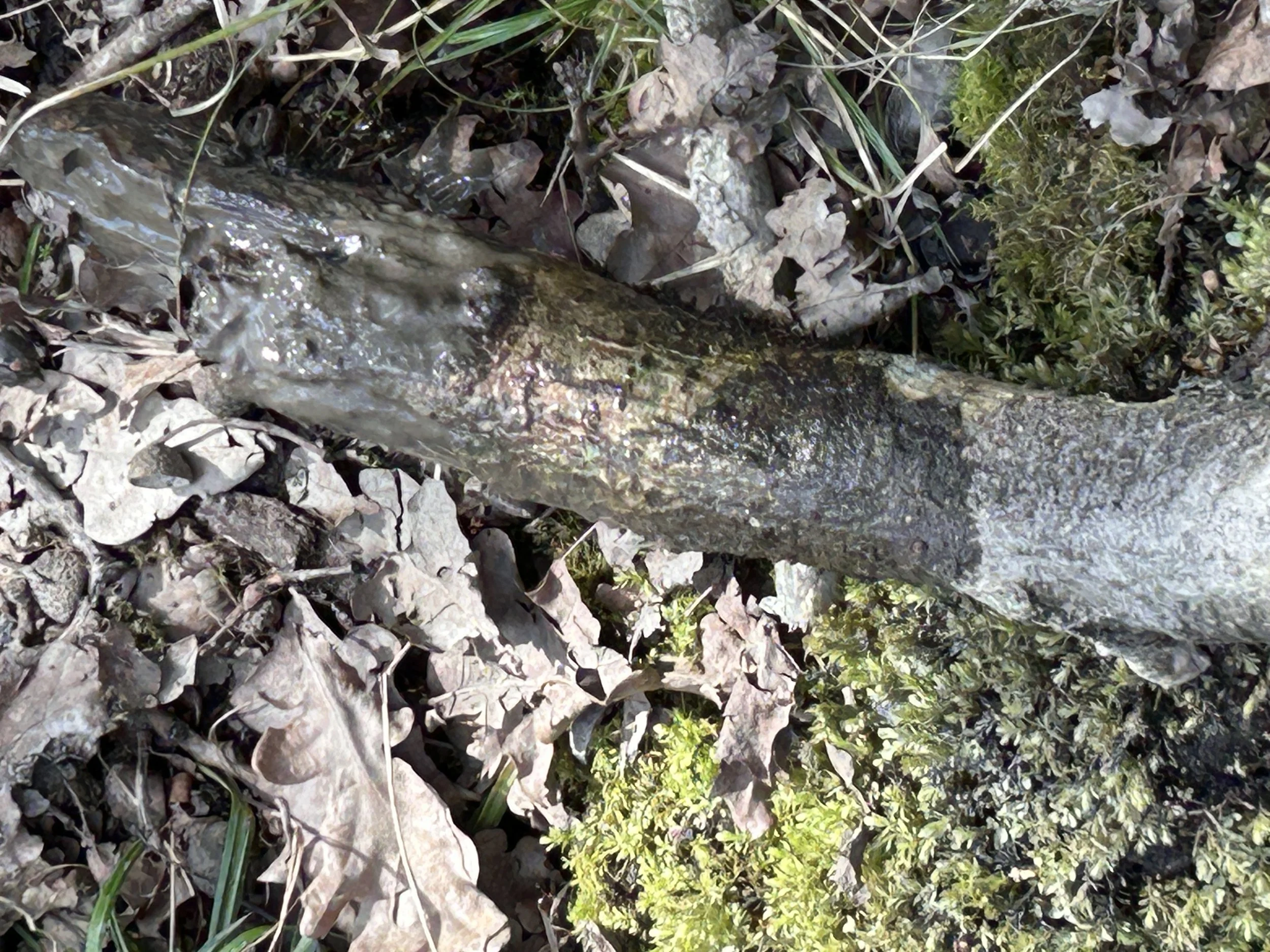
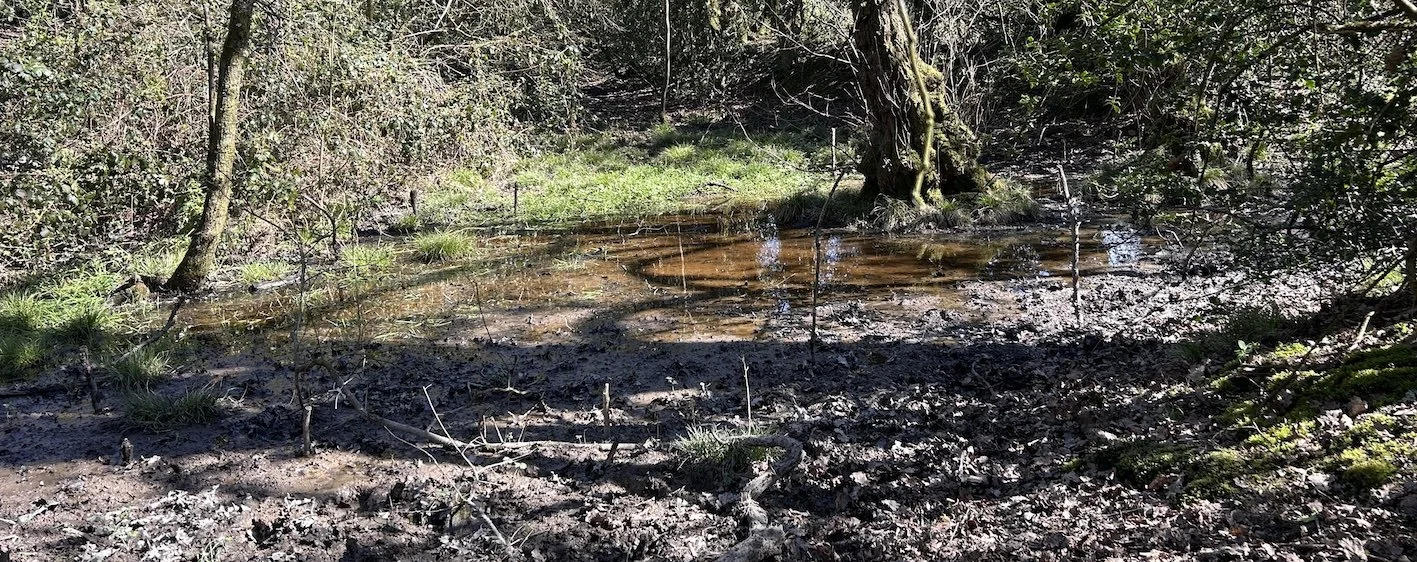
The circumference of the water covering the pond is about 3ft less than a month ago, and a small causeway is opening up between the two trees in the centre. I walk around the pond pushing in sticks to mark where water meets exposed mud. I should have done this when I first visited at the beginning of the project over the winter. I’ll measure it on my next visit, and see if the water has receded further.
The coil of paper hidden at the base of the tree is slowly being covered in decaying plants, and the one hanging in the tree is still there. I’ll leave them for another time.
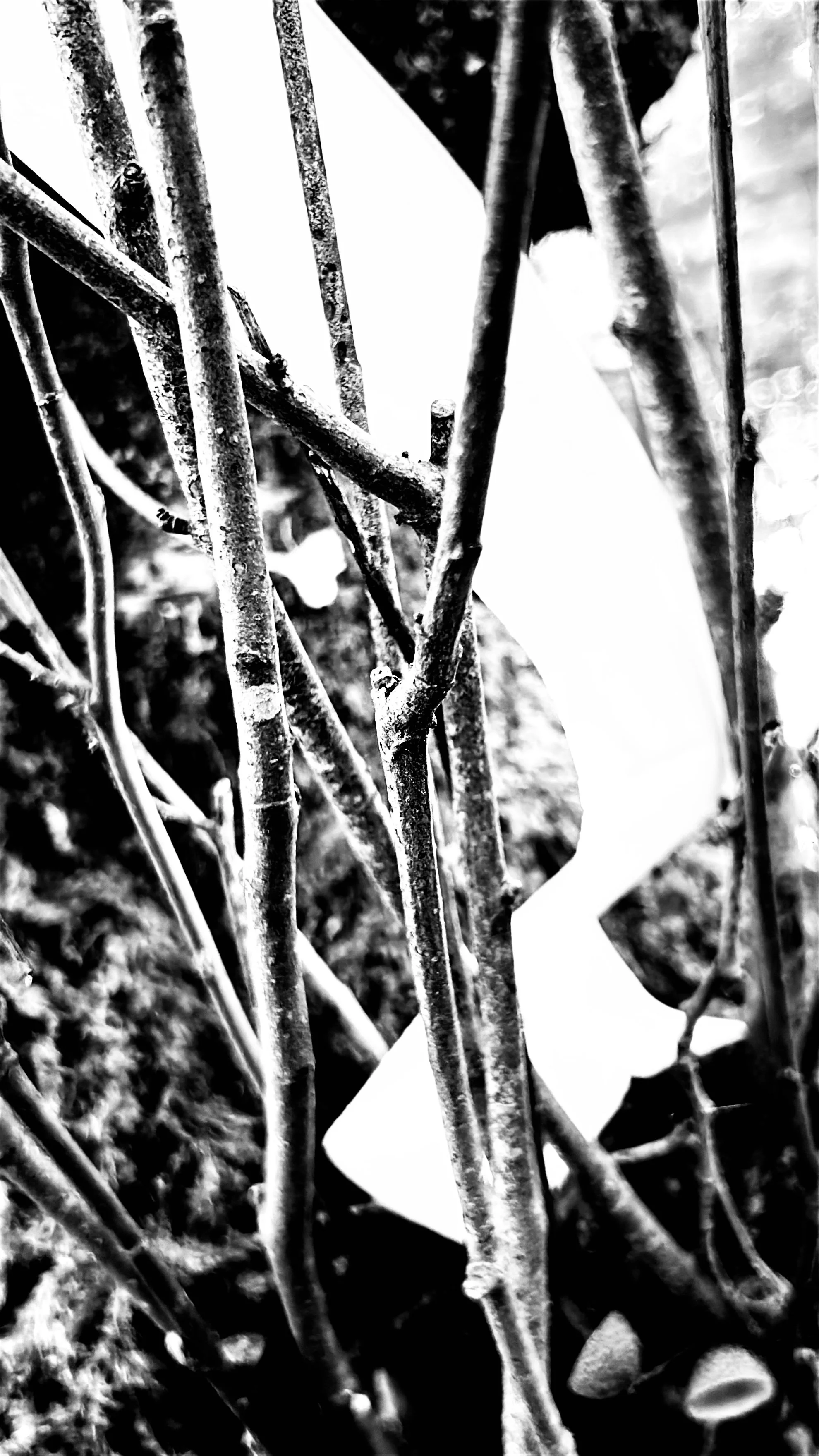
Tracing the layers
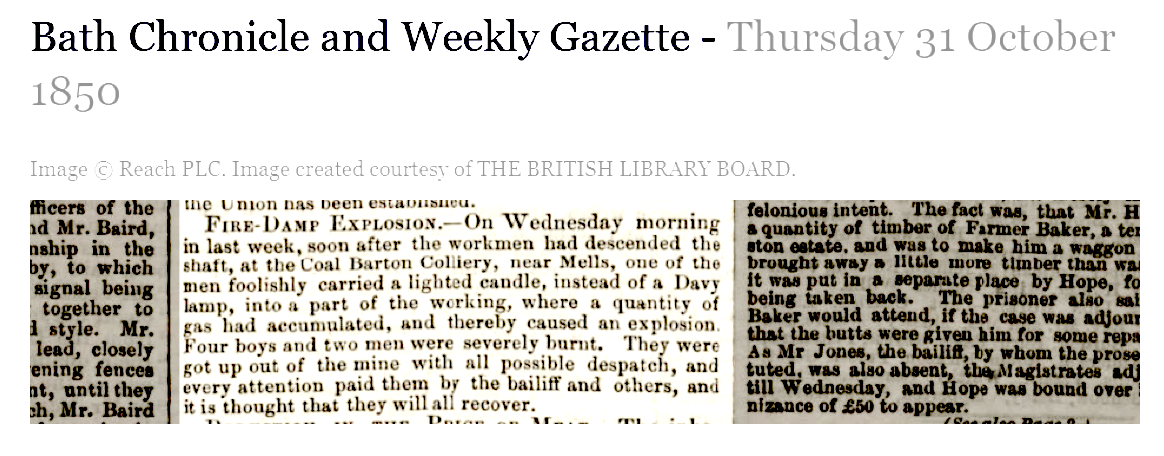
With the help of my partner Steve Poole, who knows a thing or two about historical research, we’ve been doing a bit of digging around in online archives to find more information about the Coal Barton Wood and my pond. It’s a place where, in the late 18th century, coal seams were sunk in a field called Sheere’s Close, south of Coleford (now called Coal Barton Wood); apparently 100 people were working at the pit in 1842. Coal Barton Pit [ST 680 491] closed in 1857 following a firedamp explosion killing 9 miners. My pond was a part of the coal mine – a ‘man-made’ pond - a feed taking water to, or maybe from, the pit. On the 1840 Tithe map the wood doesn’t exist, but the pond is marked on it, and shows a ‘leat’ leading from it to the colliery buildings one way and a stream feeding it flowing down from Farley Dell Pond. The mine had a water-powered bucket pump (not sure what this was).
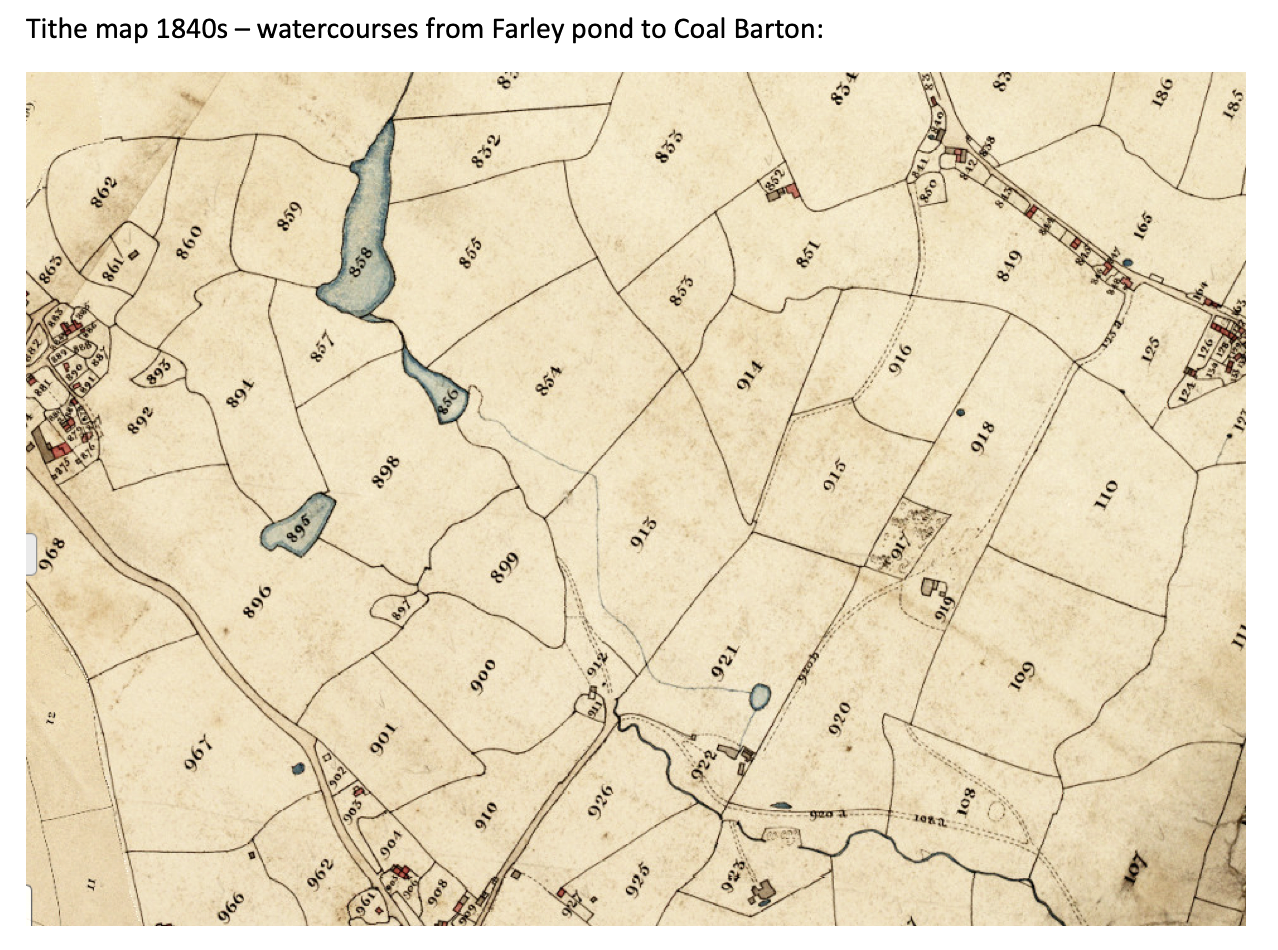
Thirty years later, after the mine had long closed, the 1880’s 6” 1st edition OS map marks a small plantation, but no pond, apart from a small dotted rectangular shape .
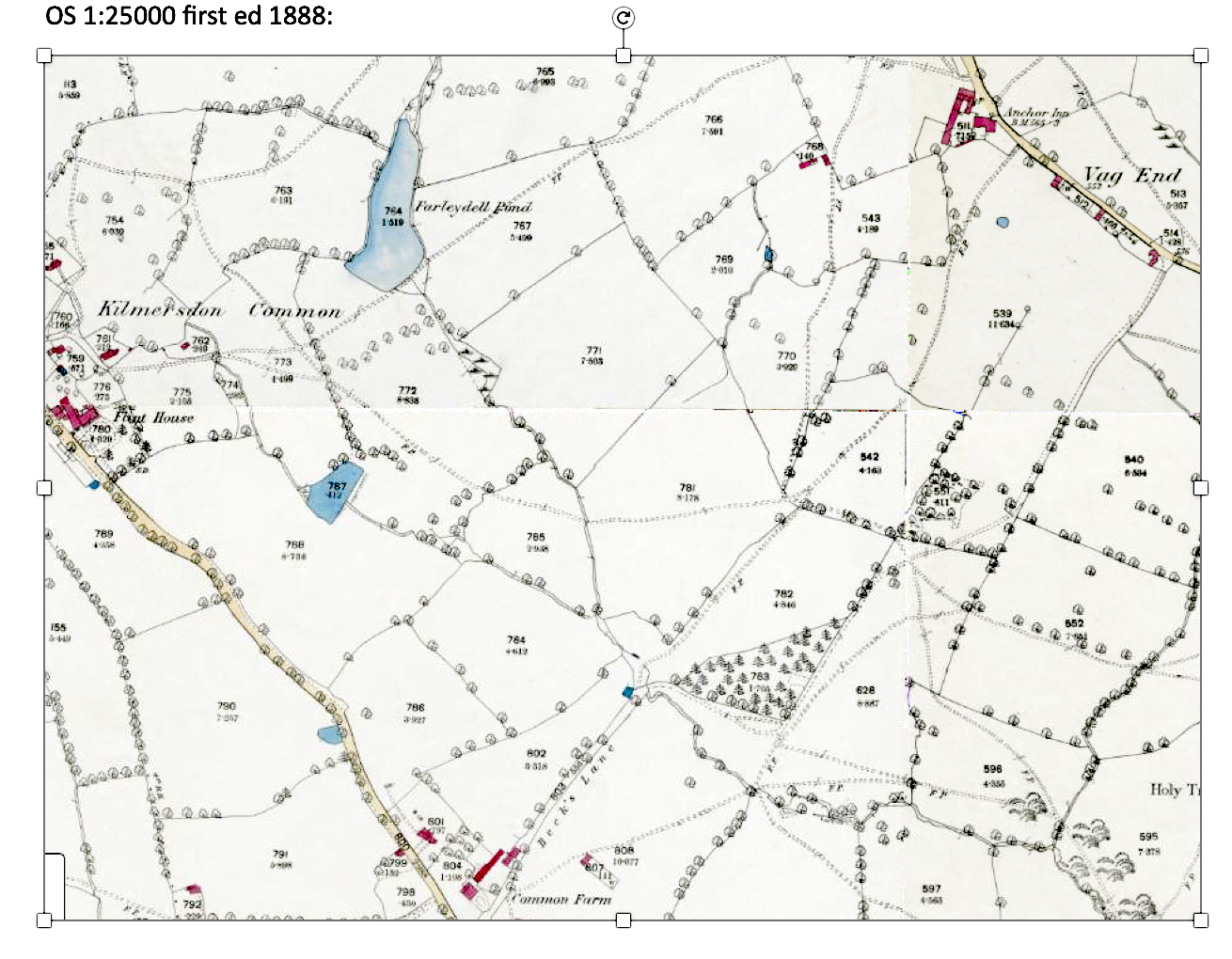
Little survives of this colliery; further into the wood an isolated stone-lined ventilation shaft [ST 683 492] has been infilled and only a shallow depression remains – now lost amongst a lot of brambles.
Then we find a 1903 map and this marks an old coal shaft and the plantation with this same rectangular area marked as ‘marshy’. This is my pond, even if it’s now a smaller hollow than it once was; embankments still surround it and right now there is water in it.
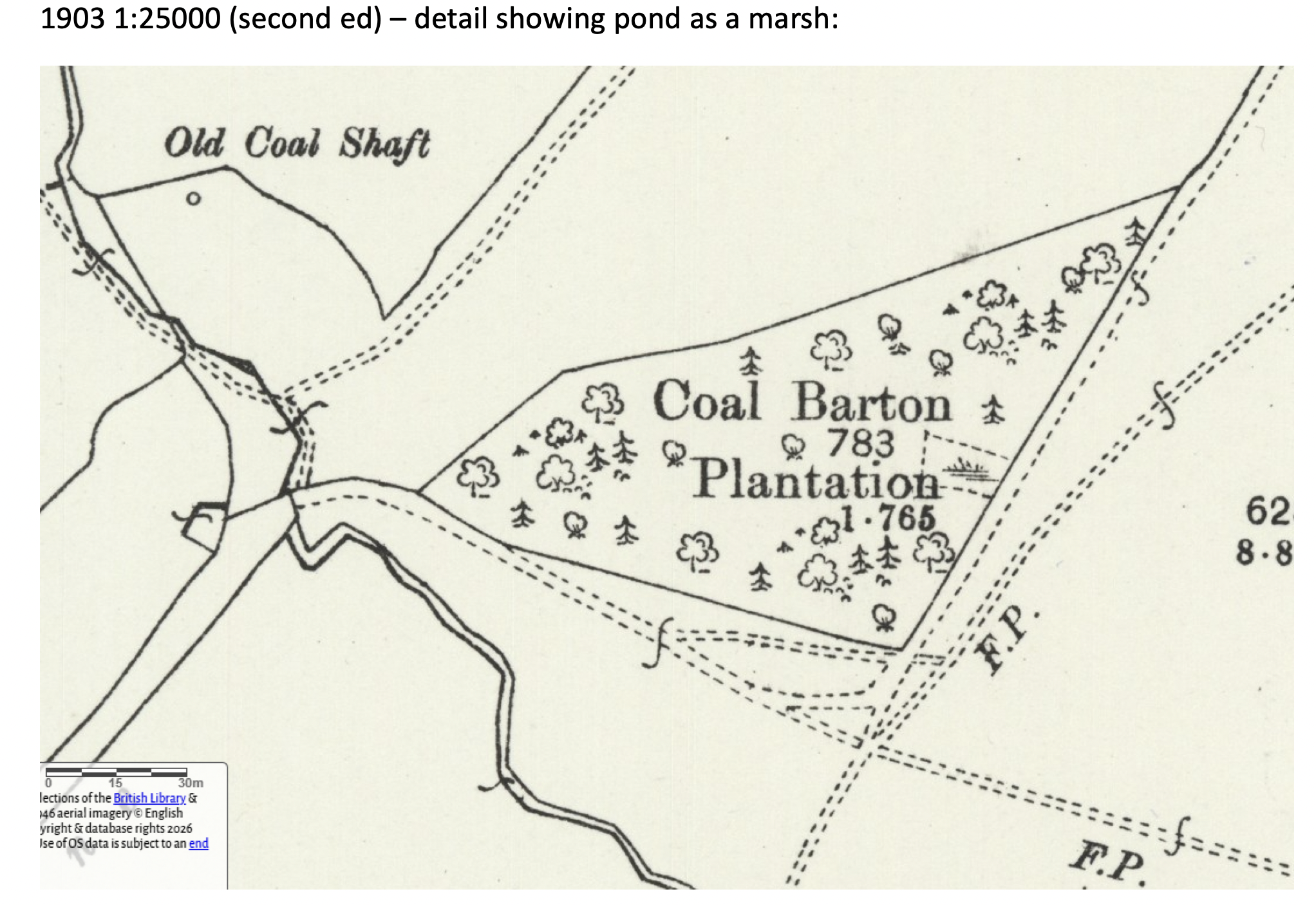
Doreen Massey writes about a space is ‘always in the process of being made.. never finished, never closed’ … ‘ a simultaneity of stories-so-far’ . I try hard to re-imagine this place and my pond as it would have been when the mine was working; it’s hard to think of it without trees, an open field full of activity, miners walking to and fro to the pit … the noises and smells would have been so different. The wood seems so established, so much part of this landscape, with its undergrowth of free-form brambles and wild flowers left to wander and reach up to the light. It’s a place people walk past, full of bird song, with the occasional dog bark and voices of people outside the wood drifting in. Having said that, on my last visit as I walk into the wood, before turning left to the pond, I notice a swing rope has been hung up in the trees and there is the makings of a den, so perhaps there is more happening here than I think.
“If the two-dimensional map asks what is in a place, the deep map asks why, how and whose experiences have created a sense of place. It seeks, in short, to ‘map the unmappable’”. (Harris, 2015, p.33). Bodenhamer DJ, Corrigan J, and Harris TM (eds) (2015) Deep Maps and Spatial Narratives. Bloomington: Indiana University Press.