August 2026 The curious space between wonder and thought
August 9th 16.30pm
Entering the cool shade of the woods I find my pond waiting. I’m finally back after 2 months away. I’m so relieved to be out of the sun and its unrelenting heat.
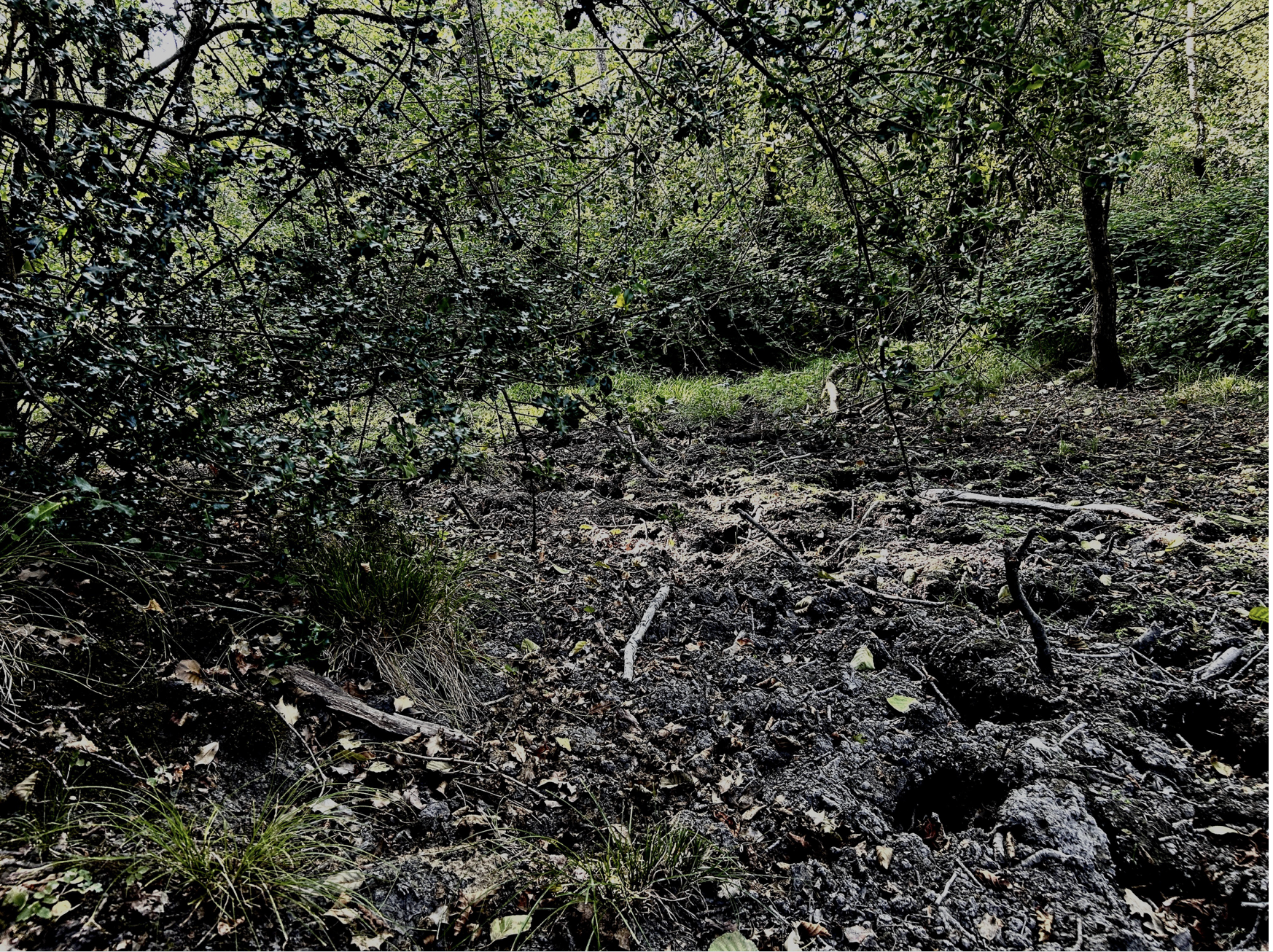
The ground crunches underfoot, a carpet of crisp dead leaves and twigs. It looks grey and tired in places. The pool is empty; I walk down the banks and across the surface; surprisingly given there hasn’t been any rain for 2 months, the ground still yields slightly to the pressure of my feet.
It has become a ghost pond which has lost its cover. The water used to hide the bed; now, the sun is drying it I consider the the contrast between the massive human effort required to dig this pit in the 1800s, and the silent, invisible power of the heat and air that has emptied it.
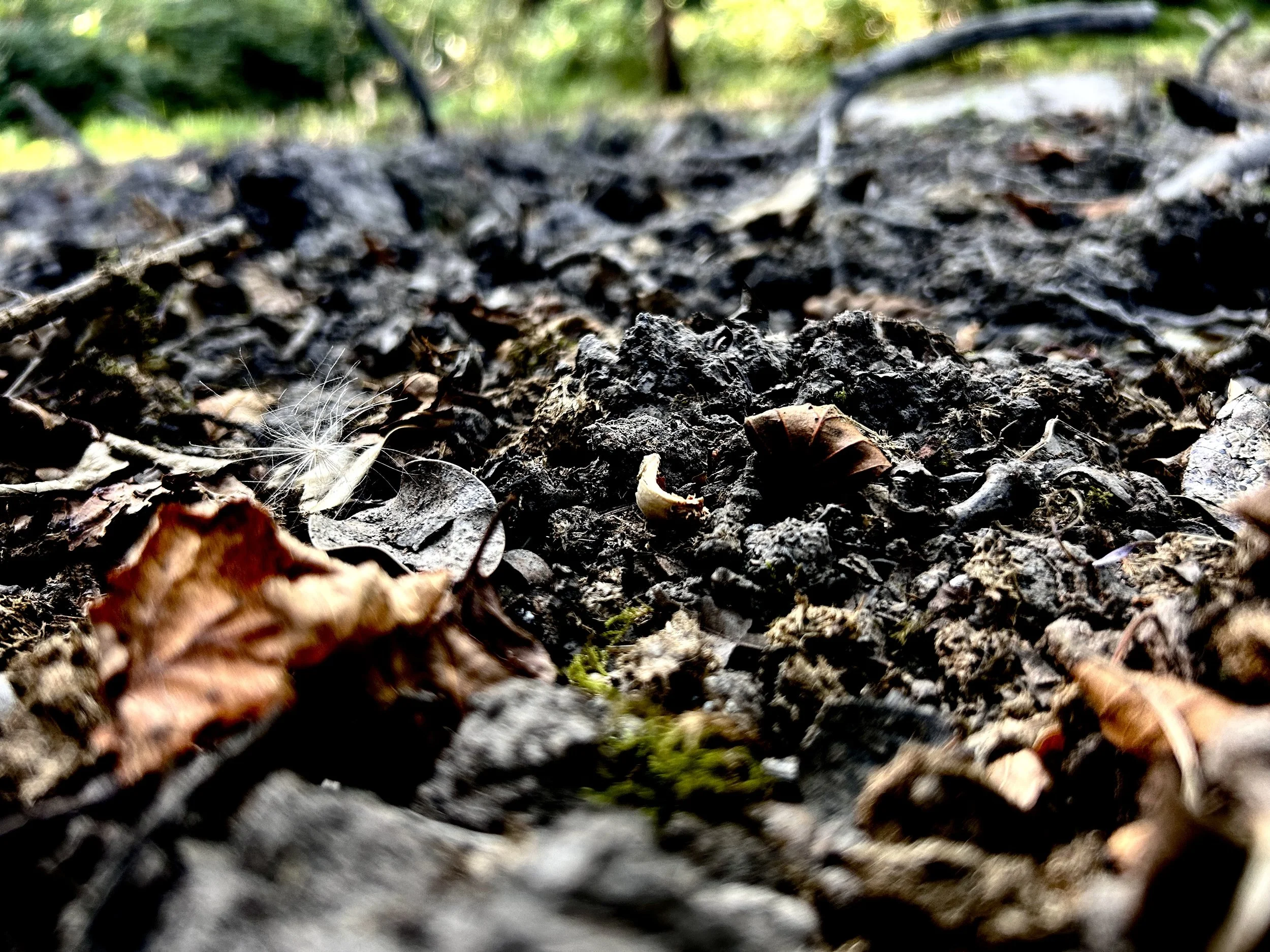
So, despite appearances, it hasn’t completely dried up. It’s as though the tide has ebbed and receded, the water replaced by an incoming tangle of blackberry brambles and grasses, on the surface a creeping plant with tiny green leaves that I must identify (but then forget to photograph).
Some of the sticks placed in January marking the circumference of the area of water are still standing, others are scattered. I follow the curve of bank build to hold the water in the early 1800, which now disappears into the trees and mass of undergrowth. It must have been significantly larger when it was dug and used by the mine. Sometime I must try to follow the banks.
Overhead there’s a breeze that I can hear but can’t feel. Tree tops slowly sway, moving against each other, dark against sky, leaves rustling, light flickering through the branches. Sometimes my eye catches tiny particles drifting past in the air, or a bird flying high above the canopy. From the banks I sit and listen. It’s quiet here today, not even a human voice or a dog barking. An occasional rustle as though an unseen animal is just passing through.
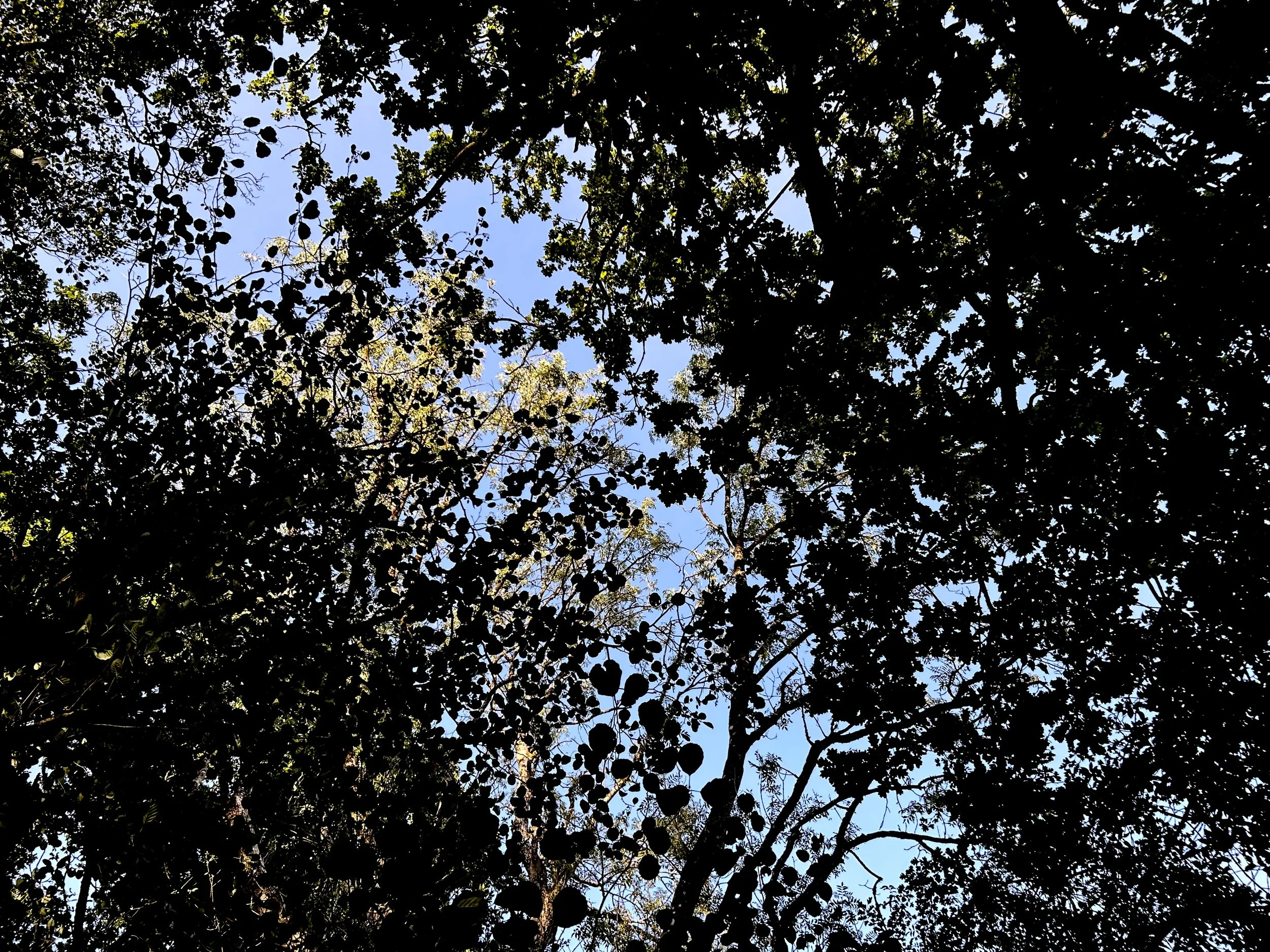
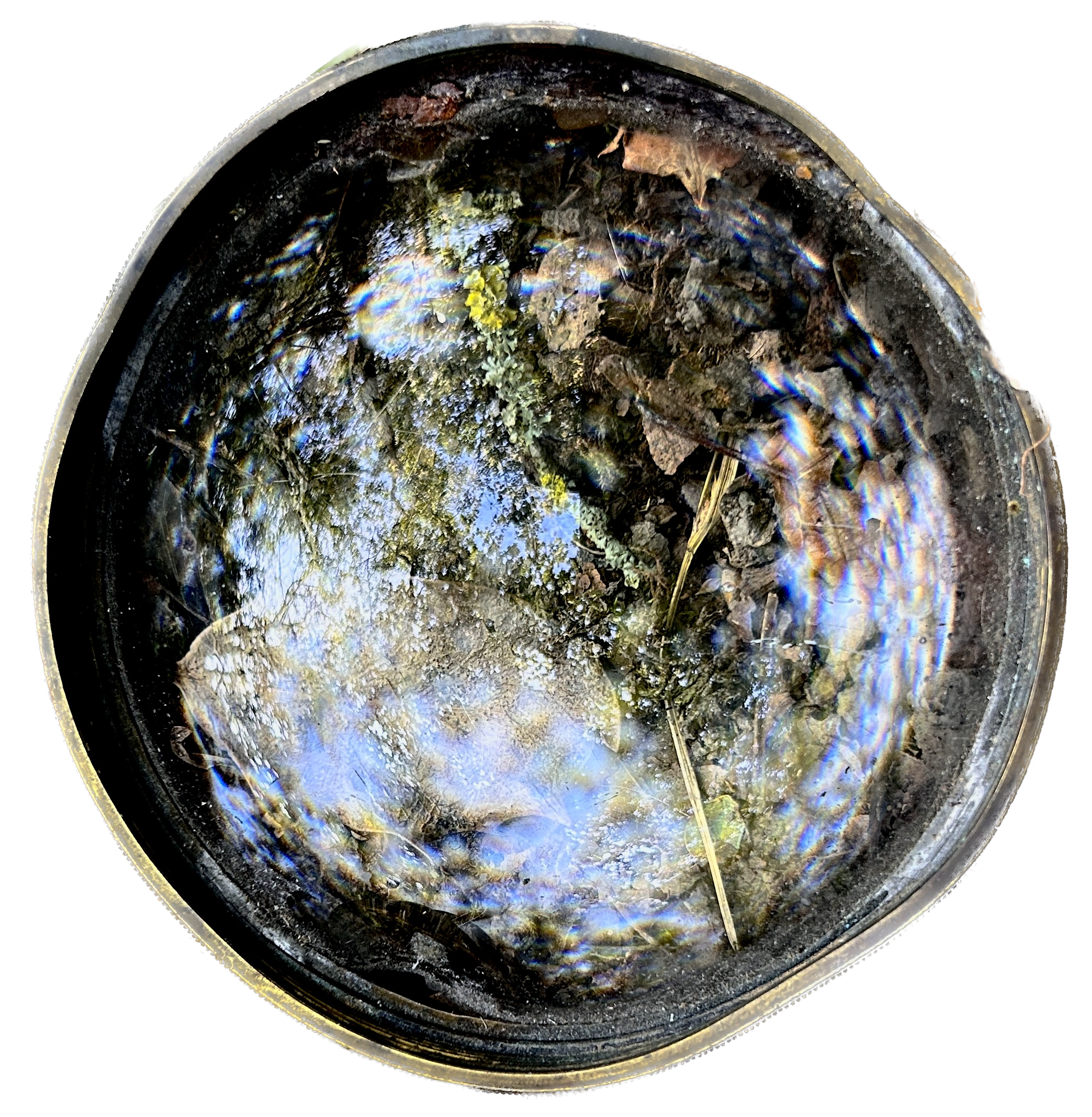
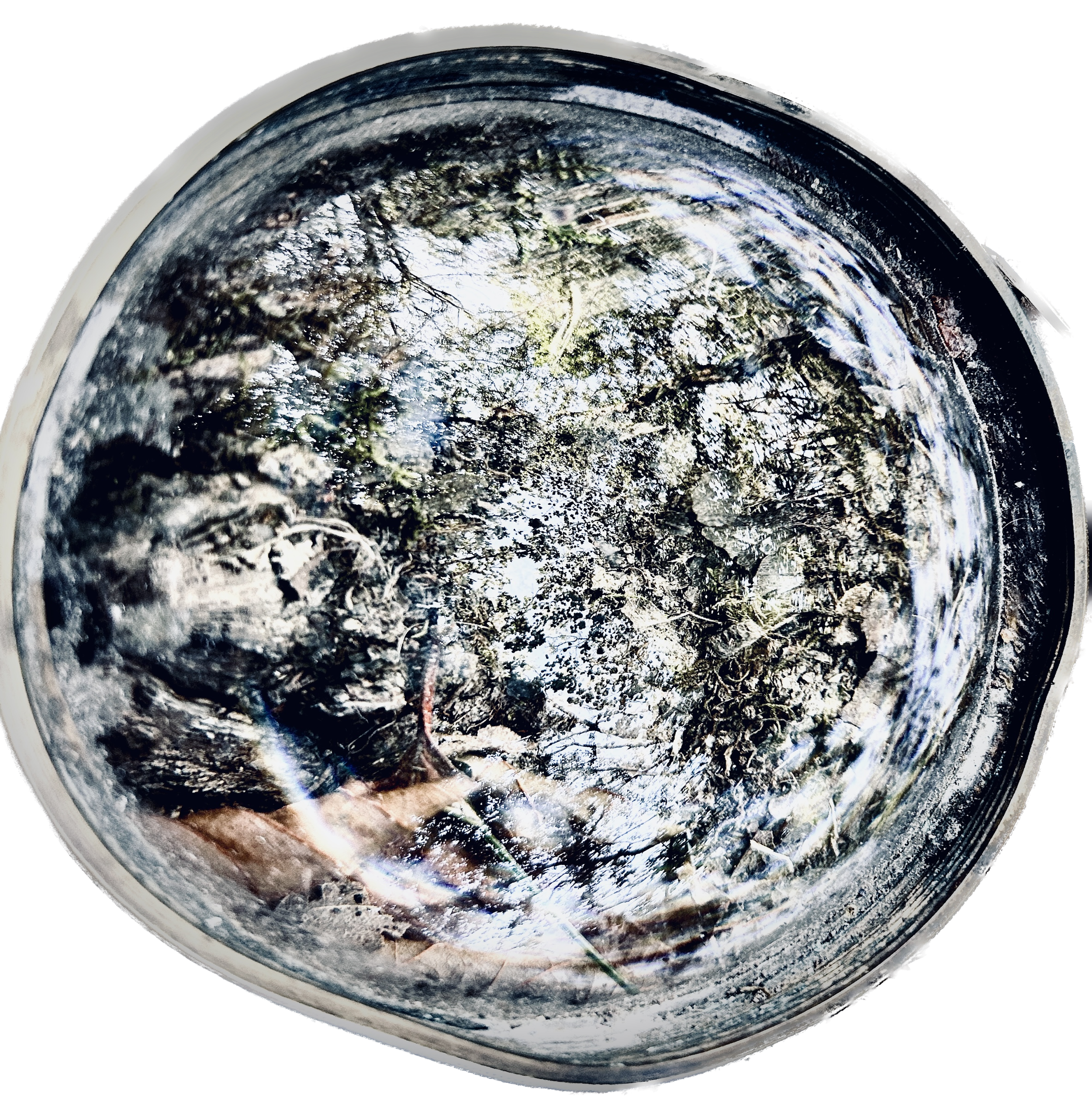
Above and below through an old magnifying glass
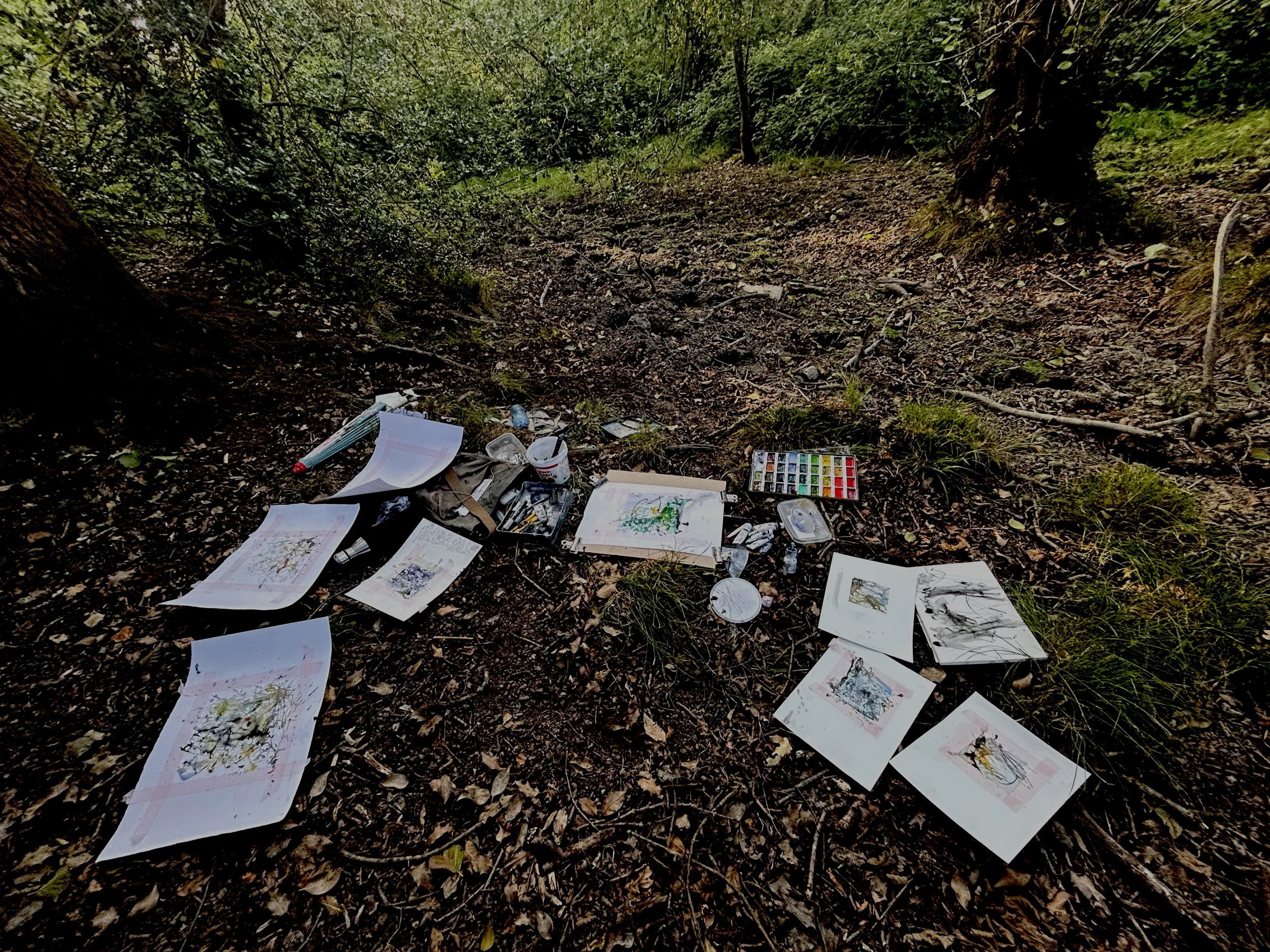
I spend the rest of the time making drawings and paintings
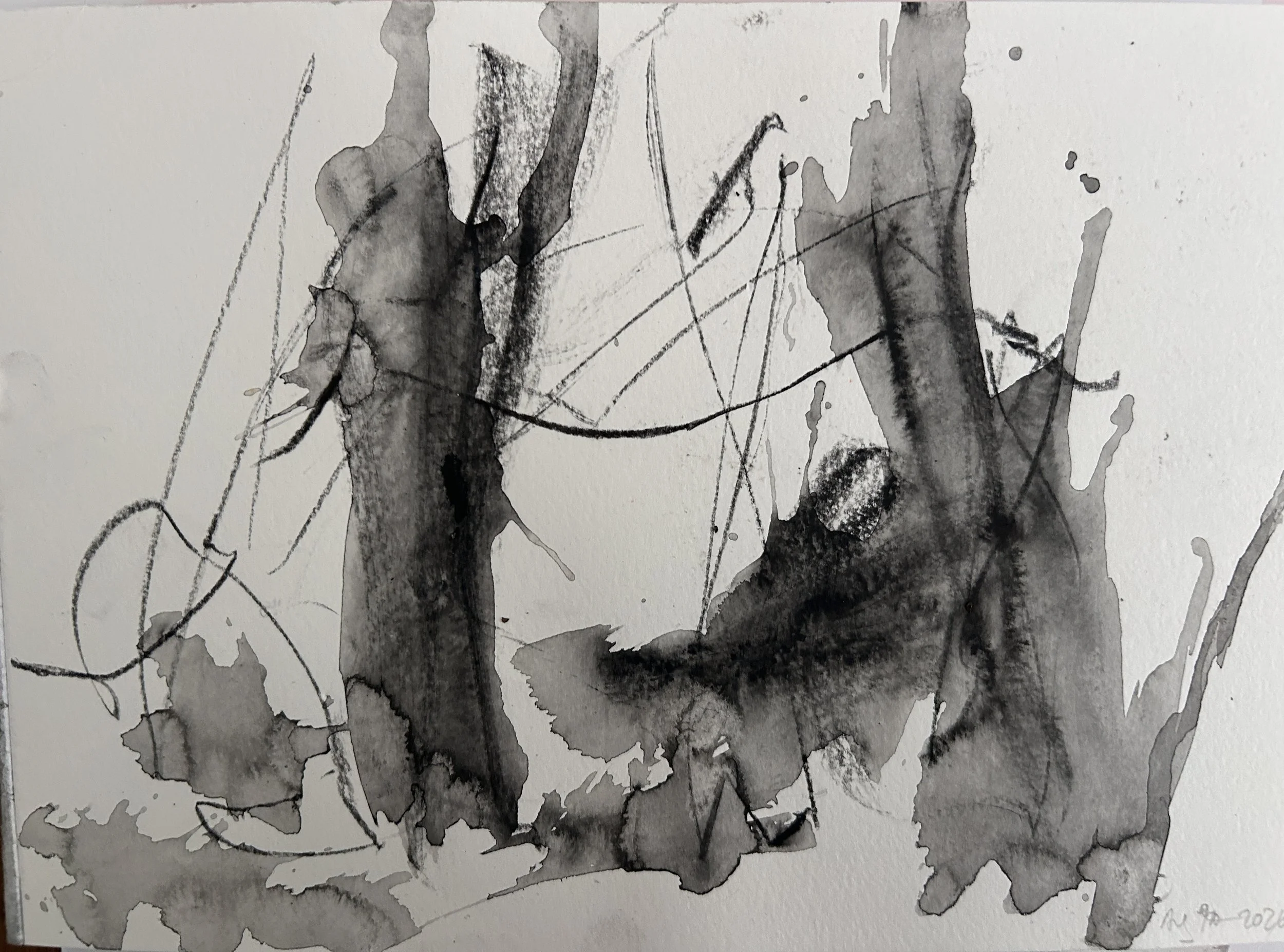
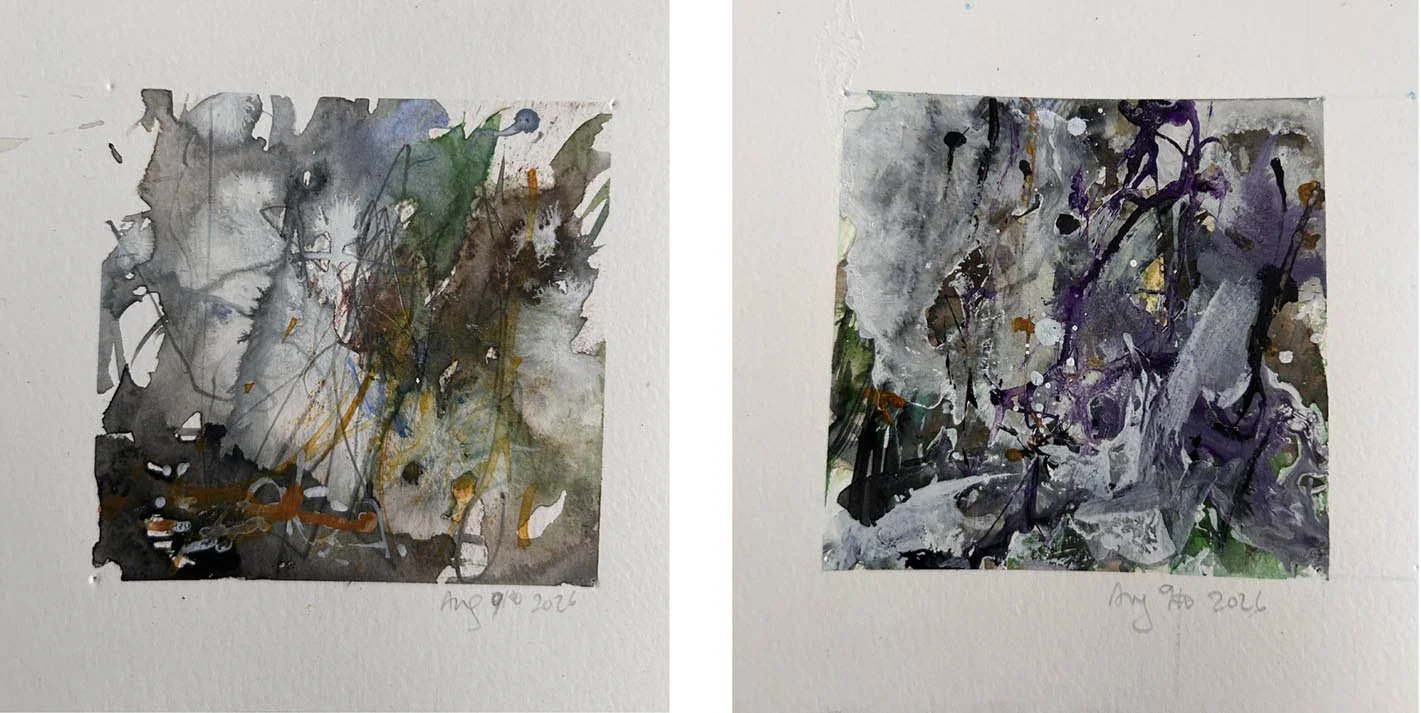
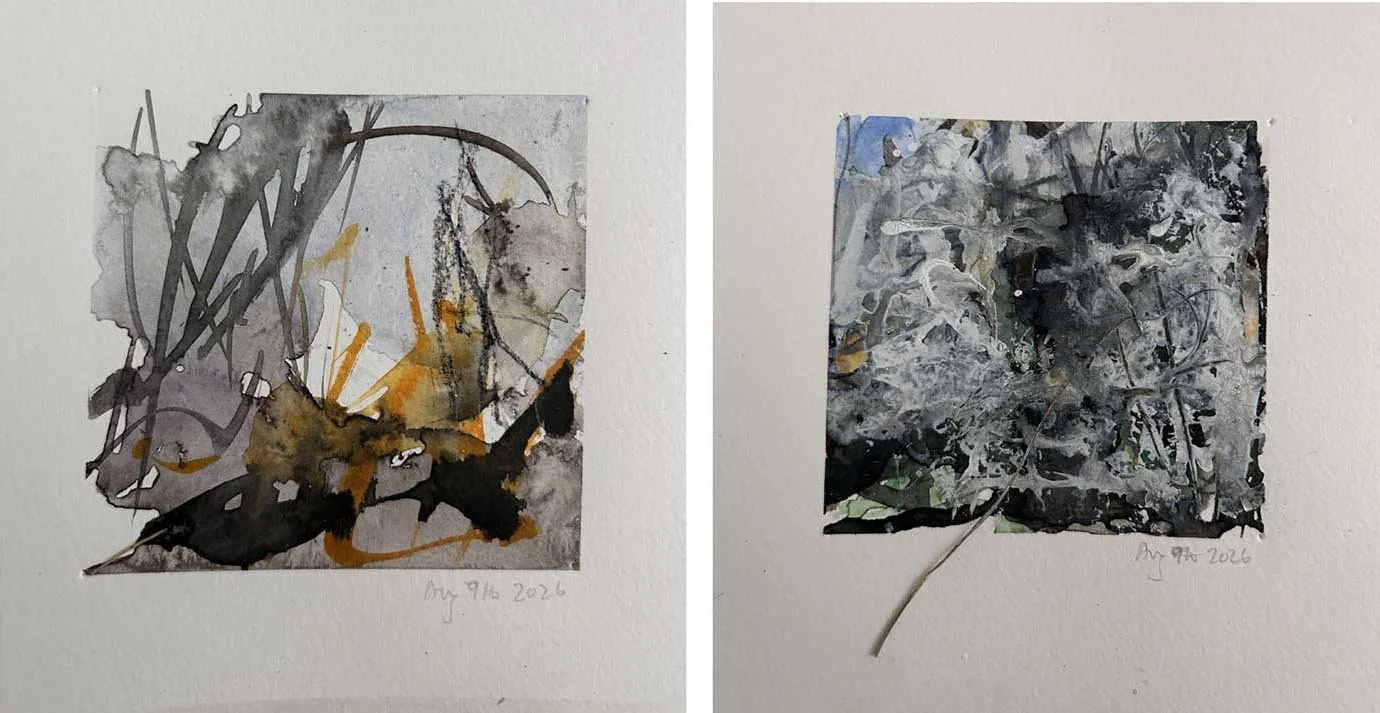
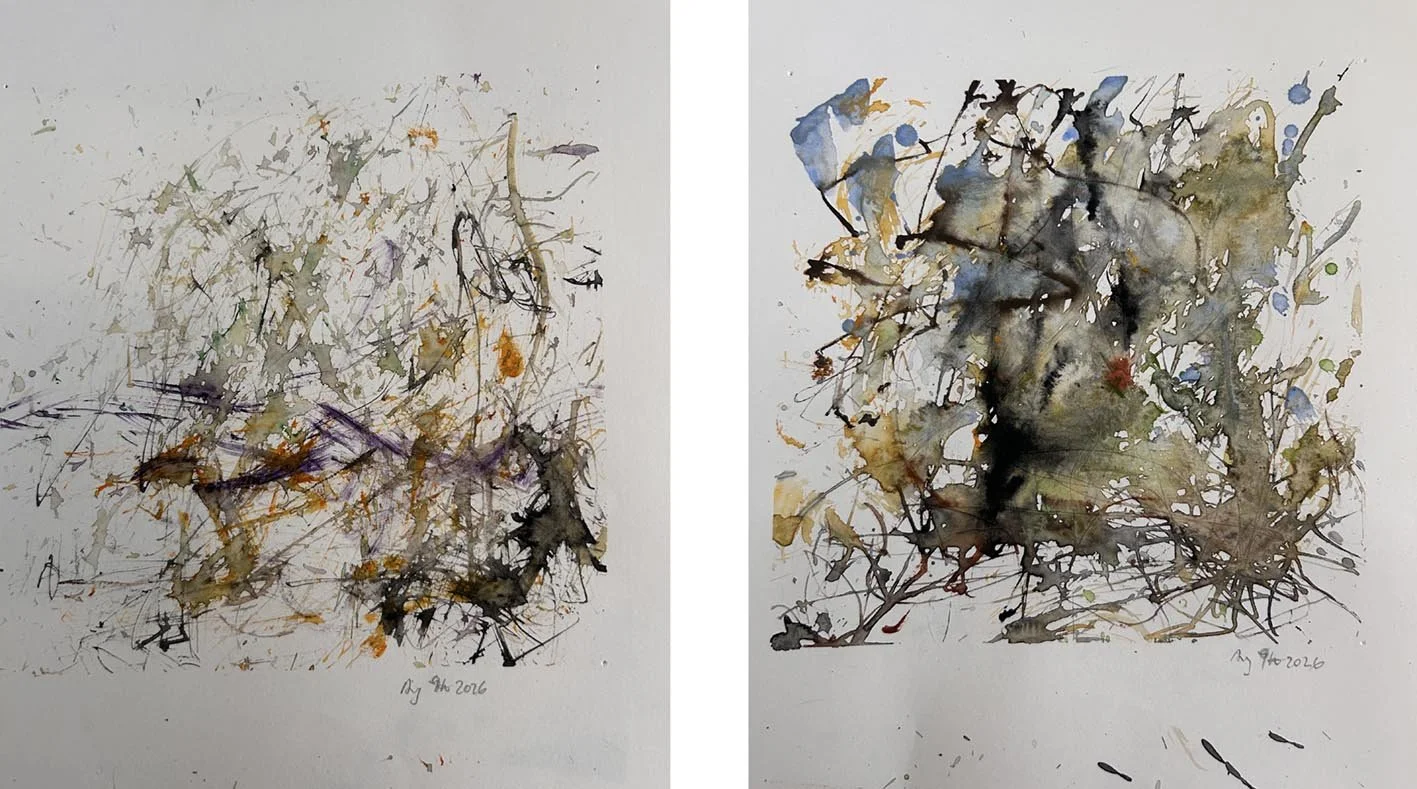
Painting using sticks and leaves - catching flickers of light and colour
Somewhere above me a bird continuously calls; the Merlin app identifies it as a Spotted flycatcher. I stare upwards, a small bird flits from branch to branch – is that it? Too fast to see. When I leave the bird is still calling somewhere up there.
I am becoming increasingly familiar with this pond and the environment around it, yet there are changes every time I arrive here. I recognise my sticks placed around the perimeter, and wonder who else has been here when I find them pushed over. Yet I have never seen anyone else here.
I am working ‘ in “the curious space between wonder and thought” a space where….“there is no single Disciplinary (in an academic sense) voice” (geographers Stephan Harrison, Steve Pile, Nigel Thrift), …. the: “space–between representation and reality, language and life, category and experience” ..’.(feminist philosopher Geraldine Finn).. (see https://www.iainbiggs.co.uk/2014/10/deep-mapping-a-partial-view/)
August 27th
Whose Place Is This Anyway?
Place cannot exist independently from the human, it is a product of many layers of interaction between people and environment; something made and remade in our imagination, constructing centres, peripheries and boundaries over time as we do so.
For many people walking in everyday, local environments is a gateway into the reality of wider landscape change, even a potential first step in caring and uncovering solutions.
Rain - really hard rain overnight and lots of it. I lie in bed listening to it beating on the windows - an unusual sound after all these months. In the morning I rush down to the pond in the expectation of finding it full of water. But disappointingly there’s none, although it is slightly boggy underfoot. After months of dry weather and intense heat it’s clearly going to take a lot more rain to refill it.
I don’t know if this pond dries up completely every summer, or whether this is unusual and due to the lack of rain? The fact that it hasn’t rained for 2 months, which is pretty unusual, and with the heat we’ve experienced over this summer, it make me think that this is climate change in action.
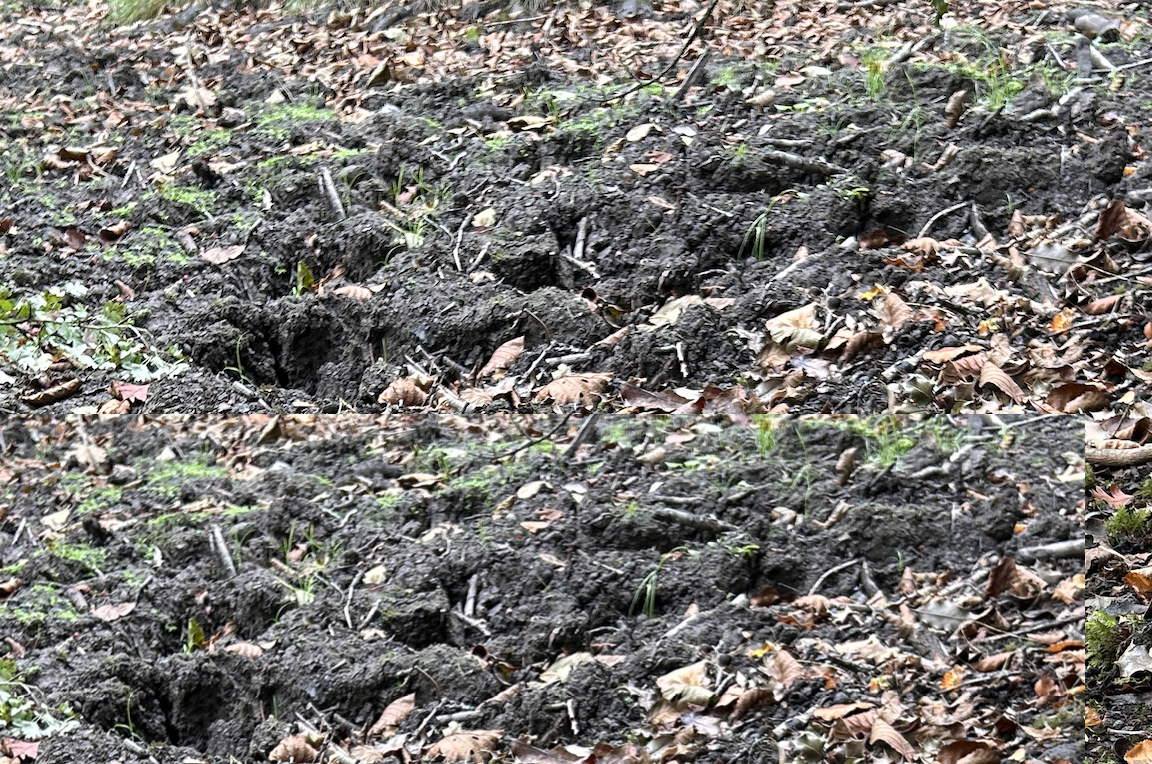
However I do find evidence of bovine presence. They’ve definitely passed through recently, so I am not the only visitor. And this points to the deep holes in the floor of the pond being made by heavy animals, and maybe the disturbance of my sticks. Perhaps they were here seeking a place to shelter from the sun, hoping to find water. Even the nearby streams have dried to a trickle.
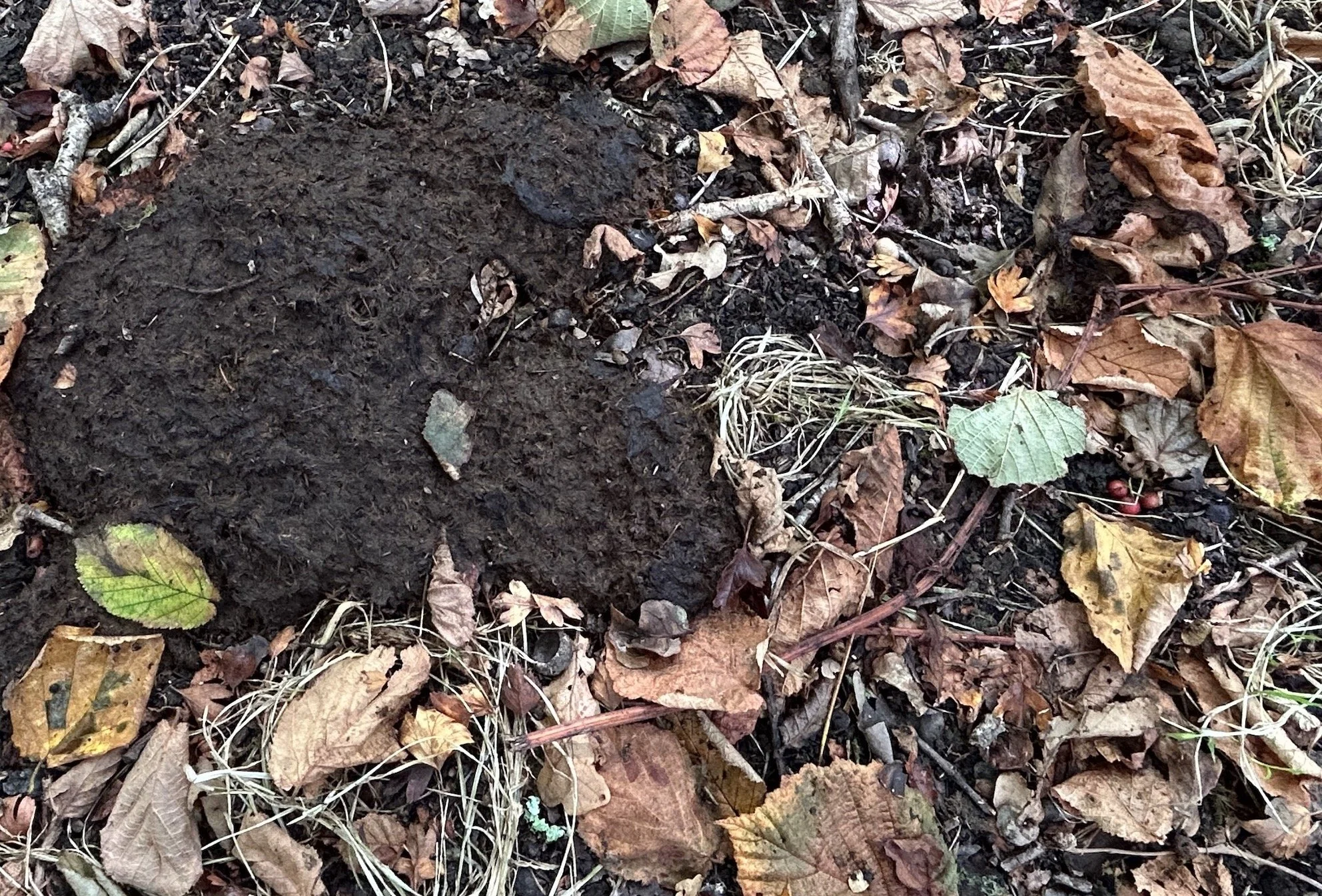
Leaves are already falling, the trees look tired, even the ones under the canopy. This morning there are a lot of squirrels dashing about - running ahead of me as I enter the wood and make my way to the pond. They are rummaging in the fallen leaves, racing up and disappearing amongst the trees. Perhaps they too have been excited by the recent rainfall, perhaps, anticipating the autumn and winter they are collecting food for the cold winter months.
Consideration of the pond through Bruno Latour’s Actor-Network Theory (ANT)
As an artist, viewing my pond through Bruno Latour’s Actor-Network Theory (ANT) transforms my creative process from observing nature into collaborating with active participants. In my "deep encounters" project, ANT allows me to treat non-human elements not as passive subjects or mere materials, but as co-creators. The presence of the squirrels, the constant sound and occasional sighting of birds, and the evidence of recent visits by the cows, makes me aware that I am sharing this space with others; they are equal actants on this place - in fact maybe some of them are more since I only visit periodically, while they may live here.
I have to stop calling this ‘my pond’.
This 19th-century pond is like an earthen pit, an unlined crater. The boundary between "human industry" and "wild nature" has completely collapsed. The water, held entirely by the earth itself, heavily shaped by the ghost geography of the mine. And through the deep craters created by the cows’ heavy bodies pressing into the pond’s surface as they pass through - the cows are living actants. This is product of the 19th-century excavation exposing lower geological layers. The 20thC resulting deep pits are mini-landscapes within the landscape, literally reshaping a 19th-century industrial void. In the 1800s, human tools dug this pit out of the earth and clay; today, the heavy hooves of cattle are stamping new topology back into it. I get down and look inside - they are soft and clay-like layers of dark brown mud and stone. The resulting deep pits are mini-landscapes within the landscape, holding onto moisture and altering how the ground dries and fractures.
The tiny green plants beginning to creep over the surface are the newest actants, taking advantage of the water's absence to colonise the industrial ghost.
I realise that I have already been co-collaborating with this pond and the environment around it. By submerging paper in the pond and the ground around it, leaving it for the environment to act upon it. The silt, pond bacteria, the movements in the earth and the moving water, have made their marks on the paper - in fact altering it significantly. This has becomes a record of the network's active movements ( see images in previous post for May).
More on this another time…
