Sunday November 1st
There’s a plan to go the pond and look for tiny creatures lurking in and around the pond. I’m equipped with my GoPro for underwater photography, my 35mm camera with a close-up lens, a tracking camera to set up to hopefully catch non-human night visitors, and my phone to take more photos. Steve has his 35mm camera with a close-up lens, he’s also looking for slime moulds; we are both going to look for tiny creatures.
We walk down through the fields to the sound of Carrion crows (Corvus Corone) cawing high in the trees. A few cows are in the top of the field, no sign of the bull or black cow number 680483. Reaching the woods, I discover that there’s no water in the pond; it’s become a muddy hollow again with some deep puddles. Last week there was an announcement that parts of Somerset, Cornwall, Devon, Dorset, East Sussex and West Sussex have now been moved into the highest drought category. This was before the recent downpours, before Storm Austen and Storm Boelo brought heavy rain to much of the country last week. I suppose I thought that amount of rain would replenish the water supply. But it’s not enough. I worry that the pond will not fully recover, but I guess that it’s part of the story.

No water
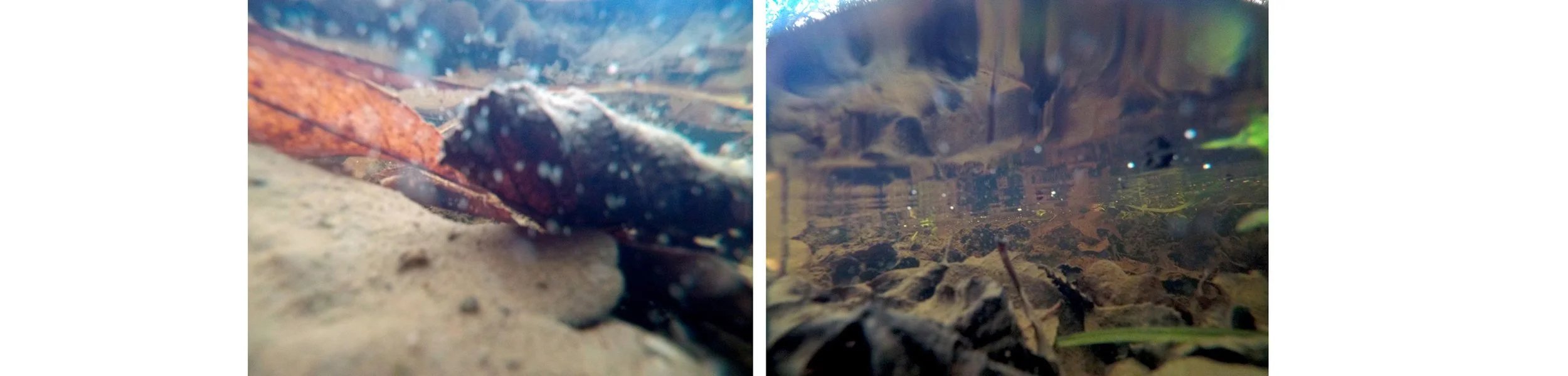
Under the water
I dip the GoPro into the deepest puddle I can find and take a couple of photos, then I scrape around in the decaying leaves and soil to find creatures. There are not many to be seen; a tiny worm and an equally tiny slug, a wood louse, and some extraordinarily tiny flies that seem to jump about so fast we can’t really see them. A tiny beetle scurries off and can’t be found again. It’s probably too cold for insects to emerge, the wrong time of the year, so I give up and go for a wander amongst the trees.
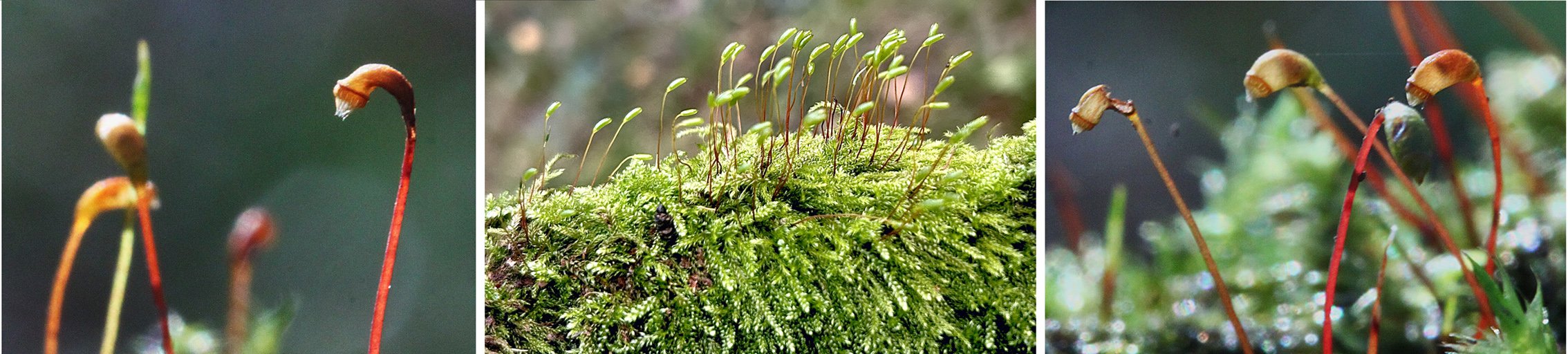
Sporophytes - images by JK and SP
I find delicate green sporophytes that have emerged from moss on a tree branch, and under the same branch, there’s a very small bracket fungus with a brown pattern, that I can’t identify.
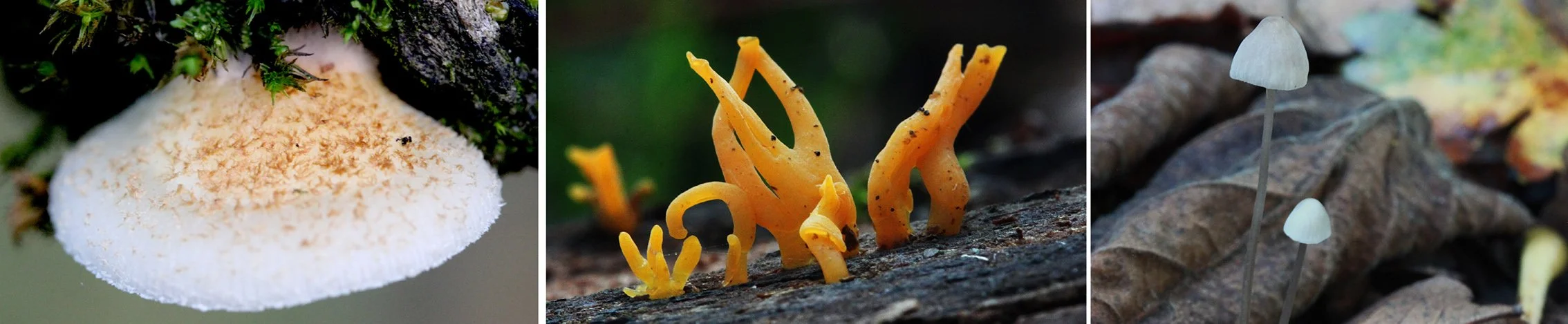
Bracket Fungus.
Yellow Stagshorn (Calocera viscosa), a bright yellow-to-orange jelly fungus, a species of fungus in the family Dacrymycetaceae, found on logs and dead wood.
Growing in decaying wood and leaves, it’s a difficult species to identify with certainty. A species of mushroom in the family Mycenaceae, angel’s bonnet - either Agaricua Uranius or Mycena arcangeliana.
Later as we are leaving the pond, I notice a magnificent patch of tawny-brown bell-shaped toadstools under the trees (Coprinellus micaeceus, commonly known as mica cap or glistening ink cap).
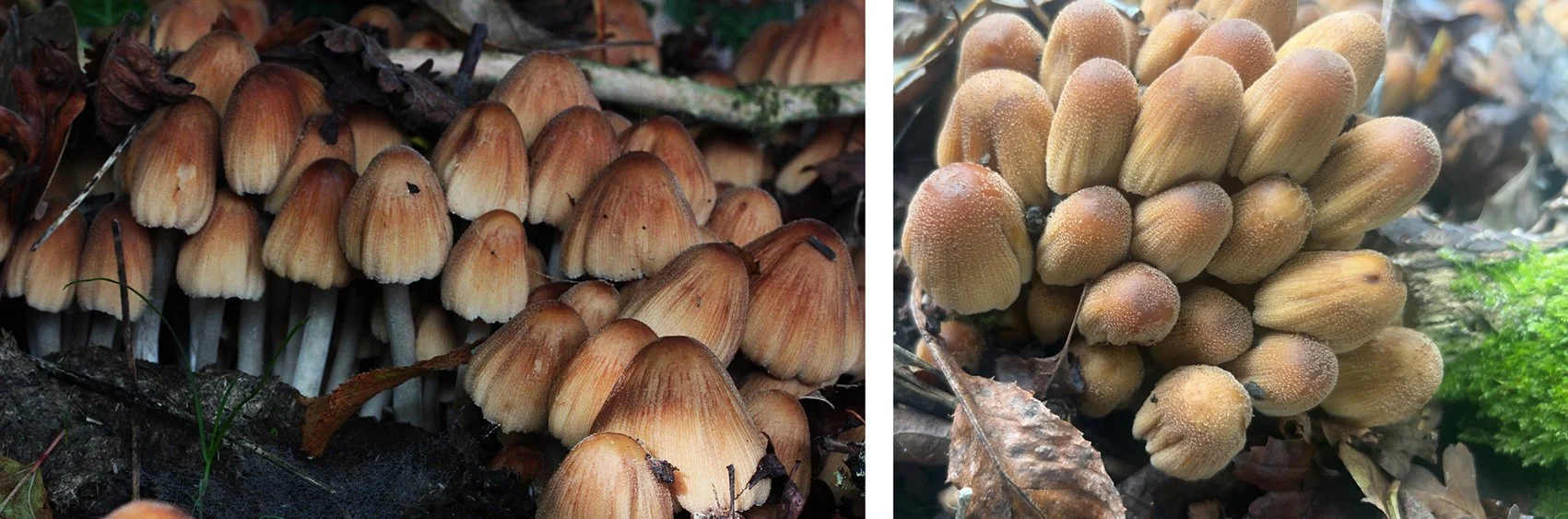
Coprinellus micaeceus
Back at the house, I become aware that something is crawling around in my hair and then it moves down my back. Enlisting Steve’s help we discover a small creatures has accompanied us home. I’ve never seen one like this before; looking it up it’s a beautiful Hawthorn Shield Bug. The creature has found me rather than me finding it.
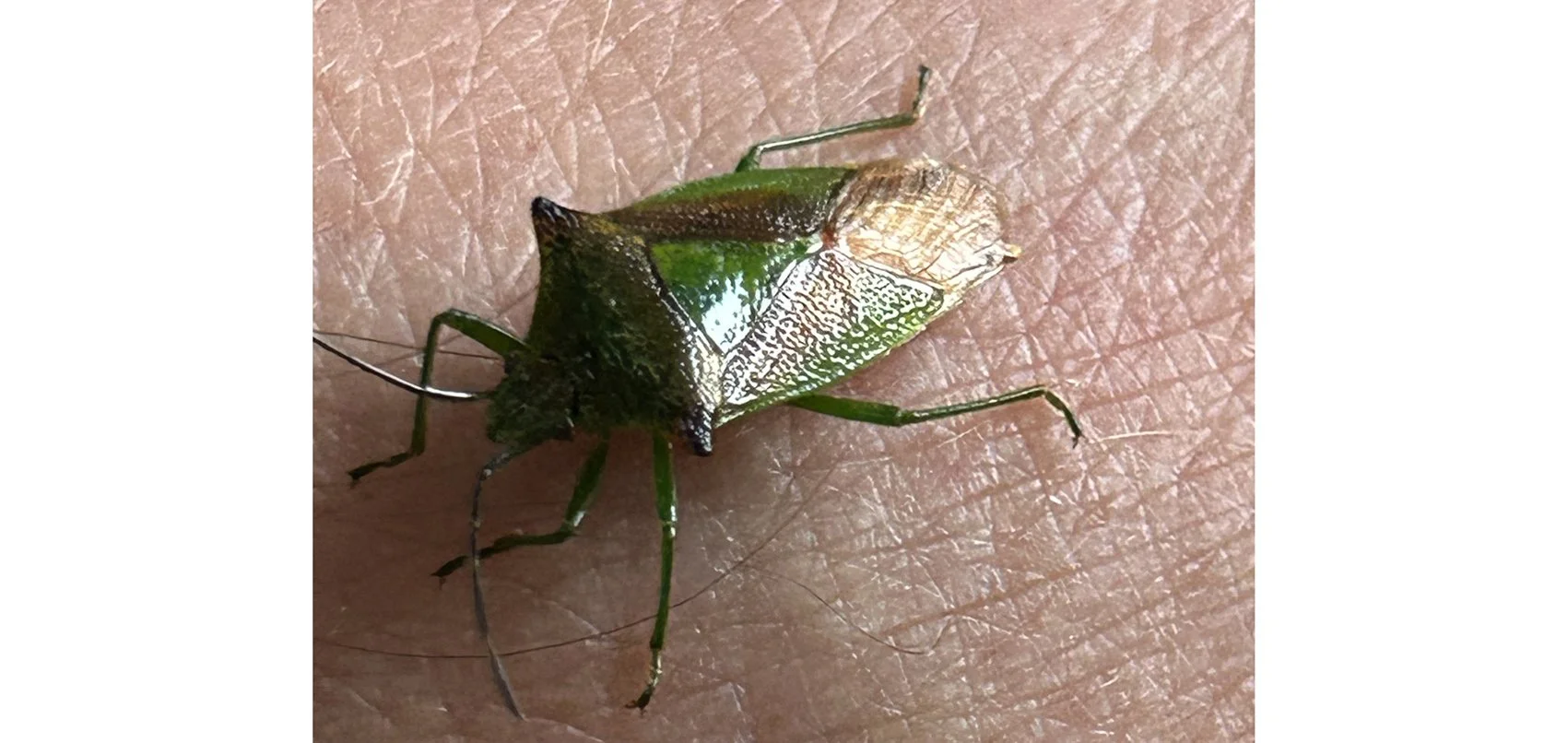
Hawthorn Shield Bug
